CategoryAuditing News

Culmination of Identity Holdup

nametagWe know the identities of the top management leading a public company, the names of boards monitoring the performance of the company, names of top owners and blockholders in the company. Yet, the identity of the audit partner signing an audit report remains elusive. The auditor remains a phantom in the US.

The Swiss-styled ‘private bank secrecy’ in the audit industry is about to change. Audit-engagement-partner secrecy is no longer permissible in the U.S. Under the newly approved rules, PCAOB now requires the name of the engagement partner to be disclosed. Accounting firms will be required to file this information in Form AP no more than 35 days after the audit firm files its audit report with the SEC. The form will be publicly available on the PCAOB’s website.

The new accounting-related rule culminates a six-year effort lead by the PCAOB that generated some controversy. Accounting firms were generally opposed to this initiative because they either considered the disclosure to be irrelevant or that such disclosures would subject engagement partners to liability risks. However, political and economic climate in the US prevailed over any opposition from accounting firms.  

Advantages

Over time, Form AP will enable investors or commercial data aggregators to accumulate information about specific partners’ experience and history. This may incrementally increase investors’ ability to make judgments about audit quality and the credibility of financial statements. Academic research suggests that investors and other capital market participants would generally benefit from such disclosures.

Effective Dates

Upon SEC approval, the new rules for engagement partner disclosure will apply to auditor’s reports issued on or after Jan. 31, 2017, or three months after SEC approval of the final rules, whichever is later. For disclosure of other accounting firms, the rules will apply to auditor’s reports issued on or after June 30, 2017.

Typical Audit Report (e.g., Walmart 2010 10-K)

…….We have audited the accompanying consolidated balance sheets of Wal-Mart Stores, Inc. as of January 31, 2008 and 2007, and the related consolidated statements of income, shareholders’ equity, and cash flows for each of the three years in the period ended January 31, 2008. These financial statements are the responsibility of the Company’s management. Our responsibility is to express an opinion on these financial statements based on our audits.

In our opinion, the financial statements referred to above present fairly, in all material respects, the consolidated financial position of Wal-Mart Stores, Inc. at January 31, 2008 and 2007, and the consolidated results of their operations and their cash flows for each of the three years in the period ended January 31, 2008, in conformity with U.S. generally accepted accounting principles.

Ernst & Young LLP

Rogers, Arkansas

March 26, 2008

As is evident from this audit report, E&Y is signing the audit report and the name of the engagement partner is not disclosed. The new rule does not require the audit firm to disclose the identity of the engagement partner within the audit report. Instead, the identity is separately disclosed in FORM AP to be filed with the PCAOB.

The accounting firms did prevail over PCAOB!

http://www.journalofaccountancy.com/news/2015/dec/pcaob-approves-audit-transparency-rule-201513562.html#sthash.94nsP78m.dpuf


mailby feather

SEC Trumps the Borders of U.S. Capital Markets

SECThe Division of Enforcement at the SEC is a law enforcement agency established to protect investors, maintain fair, orderly, and efficient markets, and facilitate capital formation. The actions of the Enforcement Division provide meaningful interpretations and applications of the U.S.
Securities Laws.

The SEC’s Division of Enforcement filed 755 enforcement actions in 2014, which is a 12% increase from the number in 2013. The number of actions undertaken by the SEC between 2003 and 2014 has been varying between 574 and 755.

Enforcement Actions By Fiscal Year
Year                                # of Actions
2003                              679
2004                              639
2005                             630
2006                             574
2007                             655
2008                             671
2009                            664
2010                            681
2011                            735
2012                           734
2013                           676
2014                           755

The enforcement actions can be grouped into the following broad categories, as identified by Floyd Advisory:

Reporting and Disclosure: Fraudulent financial reporting matters, cases involving misleading statements to investors, and faulty and/or inadequate disclosure matters

FCPA: Bribes and kickbacks to foreign officials to assist in obtaining or retaining
business as well as cases involving internal control violations

Broker-Dealer: Stock price manipulation, violations arising out of compliance deficiencies, naked short selling schemes, improper trading activities by Broker-Dealers

Delinquent Filings: Failures to make required and or timely filings with the SEC including Forms 10K, 10Q, 8K, and other mandated submissions

Insider Trading: Buying or selling a security in breach of a fiduciary duty or other relationship of trust and confidence while in possession of material, nonpublic information about the security

Investment Company: Misleading disclosures, improper fee arrangements,
misappropriation of client assets, market manipulation, and other violations of
the Investment Advisers Act

Market Manipulation: Creating false appearance of a liquid and active market, fraud involving  dormant microcap shell companies, and other disruptive trading activities

Securities Offering: Misleading and fraudulent representations to induce investors to enter into securities transactions

Accounting and Auditing Enforcement Releases (AAER)

Within the enforcement actions (i.e., the population of civil lawsuits brought in federal courts, and its notices and orders), the SEC’s Division of Enforcement separately discloses accounting- and auditing-related actions as Accounting and Auditing Enforcement Releases (“AAERs”).

The AAERs include

• Financial Reporting Frauds
• Foreign Corrupt Practices Act violations (“FCPA”)
• Violations of Books and Records
• Financial reporting issues involving improper revenue recognition, manipulation of reserves, intentional misstatement of expenses, balance sheet manipulation, options backdating and defalcations.

As of December 31, 2014, the SEC issued 93 AAERs, which is a marginal increase from the corresponding numbers in 2013 and 2012 but a 48% decline relative to the number in 2009.

Year                        AAERs
2009                        180
2010                        129
2011                       127
2012                          85
2013                          87
2014                          93

Of the 93 AAERs in 2014,

• 25% of the cases involved balance sheet manipulation
• 22% of the cases involved intentional misstatement of expenses
• 20% of the cases involved improper revenue recognition
• 8% of the cases involved manipulation of reserves
• 5% of the cases involved options backdating
• 20% Other cases

Punchline

Beware of corporate misconduct in the U.S., you are under the strict surveillance of Uncle Sam.

October 24, 2P.

www.securitiesmatters.com/files/2015/03/FloydAdvisory.pdf

mailby feather

PCAOB Inspections Red Flag Accounting Firms’ Risk Assessment

pcaob-squarelogo-1403123390934Public Company Accounting Oversight Board (PCAOB) report, based on inspections of registered public accounting firms from 2012 to 2014, finds significant deficiencies in auditing firms’ assessment of clients’ risk. The risk assessment standards, Auditing Standards No. 8 through No. 15 adopted in 2010, are designed to assist the auditor in assessing audit risk, to respond to the risks of material misstatement, and to evaluate results of procedures performed in an audit.

In audits performed in accordance with PCAOB standards, risk underlies the entire audit process, including the procedures that the auditor performs to support the opinion expressed in the auditor’s report. PCAOB adopted eight Risk Assessment Standards to establish audit requirements to enhance the effectiveness of the auditor’s assessment of and response to the risks of material misstatement in an audit. Proper application of these standards is important for performing effective audits of internal control and audits of financial statements.

The eight auditing standards that address procedures performed from initial planning through the evaluation of audit results to support an opinion include:

• AS No. 8, Audit Risk
• AS No. 9, Audit Planning
• AS No. 10, Supervision of the Audit Engagement
• AS No. 11, Consideration of Materiality in Planning and Performing an Audit
• AS No. 12, Identifying and Assessing Risks of Material Misstatement
• AS No. 13, The Auditor’s Responses to the Risks of Material Misstatement
• AS No. 14, Evaluating Audit Results
• AS No. 15, Audit Evidence

PCAOB Findings

Based on 2012 inspections, the Board staff found that while accounting firms generally made appropriate adjustments to their audit methodologies to implement the new risk assessment standards, 26% of the 632 engagements inspected had audit deficiency related to one or more of the risk-based standards, which contributed to an insufficiently supported audit opinion. The number of audit deficiencies increased to 27% in 2013. The Board finds similar audit deficiencies in 2014.

The most frequently identified Risk Assessment Deficiencies related to AS No. 13, The Auditor’s Responses to the Risks of Material Misstatement, AS No. 14, Evaluating Audit Results, and AS No. 15, Audit Evidence.

Examples of Common Deficiencies Include:

• Firms did not perform substantive procedures, including tests of details, that were specifically responsive to fraud risks and other significant risks that were identified (AS No. 13)

• Firms did not perform sufficient testing of the design and operating effectiveness of controls to support their planned level of control reliance, including testing controls over the system-generated data and reports that were used to support important controls or substantive procedures performed in response to the assessed risks of material misstatement (AS No. 13 and AS No. 15)

• Firms did not evaluate the accuracy and completeness of financial statement disclosures. (AS No. 14)

• Firms did not take into account relevant audit evidence that appeared to contradict certain assertions in the financial statements. (AS No. 14)

Implications?

Recurring audit deficiencies related to the risk assessment standards suggest that audit quality challenges remain and, according to PCAOB, more can be done to improve the quality of audits. Audit committees may also find this report useful in fulfilling their responsibilities with respect to independent auditors. Audit committees may consider inquiring of the Issuer’s auditor:

• Have the PCAOB’s inspections or firm’s internal inspections identified any significant deficiencies in the firm’s compliance with the Risk Assessment Standards, and if so, what actions has the firm taken to address these?

• Which audit areas have been identified by the auditor as having significant risks of material misstatement and, at a high level, how does the audit plan address those risks?

• In the auditor’s view, how have the areas of significant risk of material misstatement changed since the prior year and why? What new risks has the auditor identified?

October 16, 2015, 10.50P

http://pcaobus.org/Inspections/Documents/Risk-Assessment-Standards-Inspections.pdf

mailby feather

Who Bears the Cost of Earnings Fraud?

bankrateBankrate Inc. is a leading publisher, aggregator and distributor of personal finance content on the Internet providing consumers with proprietary and objective personal finance editorial content across multiple categories including mortgages, deposits, insurance, credit cards, retirement, automobile loans and taxes. This month, Bankrate Inc. agreed to pay $15 million to settle accounting fraud charges brought by the SEC against the company. Three former executives were also charged because of their involvement in the fraudulent manipulation of the company’s financial results to meet analyst expectations. The SEC alleges that the company’s executives fabricated revenues and avoided booking certain expenses to meet analyst estimates of EBITDA. Bankrate’s stock rose when the company announced the inflated financial results, and the company’s then CFO proceeded to sell more than $2 million in company stock following the inflated stock price.

According to the SEC’s complaint filed in federal court in Manhattan:

1. After learning that Bankrate’s preliminary financial results for the second quarter of 2012 fell short of analyst estimates, the CFO decided to increase the company’s revenues by

o Improperly directing its insurance and credit cards division to book additional revenue without any supporting evidence of a sale.
o The insurance division immediately booked the requested revenue to a dormant customer account with no intention of justifying the revenue until it was flagged by the company’s auditor.
o The credit cards division resisted such directives but nevertheless booked some improper revenue.
o Refusing to accept the credit card division’s unwillingness to record the full amount of improper revenue, the CFO insisted that the approximate difference be recorded as revenue by the mortgage business.

2. Bankrate also improperly reduced certain expenses, or failed to book them at all, in order to meet analyst estimates.

3. The CFO and some other executives lied to the company’s auditor regarding the improper accounting entries.

Ultimately, it is the company’s shareholders who are penalized because of accounting frauds. Bankrate’s stock price went up from around $15 in 2011 to an all-time high of $25 in 2012 largely because of inflated earnings. Since then, the stock price has plunged to an all-time low of $10. Accounting related fraud destroyed nearly $1.5 billion in shareholder value over a period of three years. Caveat emptor, let the buyer beware when investing in the stock market.

http://www.sec.gov/news/pressrelease/2015-180.html

mailby feather

The Future of the Auditing Profession

imagesKPMG and Forbes Insights recently compiled a survey of 151 respondents who are audit committee chairs and members, CEOs, CFOs, other C-level executives and controllers, directors of financial reporting, investors, audit associates, accounting students, and audit professors. Some key conclusions of the survey respondents include:

  • 93% believe that the audit profession needs to evolve, yet the direction of the evolution remains uncertain. A third believe that auditors should go beyond certifying numbers. In contrast, the majority believe that the auditors’ role should remain unchanged—only the way they perform the audit should evolve.
  • The majority agree that a trio of skills are essential for future auditors: experience in the client’s industry, investigative financial skills, and critical thinking.
  •  The majority consider culture and the regulatory environment as the biggest challenges to enhancing the role of the audit. The intertwining of these two factors leads to a highly structured, process-oriented working environment, which can create resistance to change.
  •  The majority agree that increasing the profession’s status is the most important way for audits to evolve in the future. Audit should be perceived as a profession, not a job, and career tracks should be more rewarding.
  •  The consensus is that technology is likely to have the biggest impact on the audit profession, especially for young auditors who benefit from technology because it provides tools for more sophisticated analysis.

In the US, and in most countries, public companies are required to have their financial statements audited by an independent public accountant. The Supreme Court, in United States v. Arthur Young (1984) describes the audit as a “public watchdog” function that “demands that the accountant maintain total independence from the client at all times and requires complete fidelity to the public trust.”

http://www.forbes.com/forbesinsights/kpmg_audit/index.html

mailby feather

To Disclose or Not To Disclose: Identity of The Audit Engagement Partner

pcaob-squarelogo-1403123390934In the U.S., the auditor’s report discloses only the name of the audit firm issuing the report but never any information about the identity of the partner(s) who led the work.The Public Company Accounting Oversight Board (PCAOB) is proposing that audit firms should be required to file a new form to make the identity of the audit engagement partner public in the audit report.

The crucial economic question is whether disclosing the identify of the lead audit partner improves the transparency of public company audits and whether such information aids investors and creditors in their decision-making process?

As this information becomes publicly available over multiple years, investors get to observe, and assess, whether a particular lead audit partner is more likely to be associated with: (1) fewer financial reporting misstatements, (2) higher audit quality, (3) higher audit fees, which is presumably because of rendering high audit quality,  (4) lower earnings management, and (5) higher frequency of modified going concern reports when a client is in financial trouble. Thus, using data from the past to draw inferences about the type of audit quality rendered by a particular audit engagement partner is likely to increase the reliability of financial statements to its users, but this benefit is likely to accrue over time.

It is also possible that disclosing the identity of the lead partner would alter the behavior of the audit partner relative to the current regime where such disclosure is not mandated (a classic disclosure problem extensively analyzed in economics, finance and accounting), which could lead to immediate improvements in audit quality. Users can also infer whether the engagement partner had any prior relationship with the client which has implications for auditor independence and therefore might impact audit quality. These are some of the benefits, there are other benefits as well.

However, it is important to highlight that there might be some costs. Audit fees are likely to increase as audit firms might begin to charge more  because of higher litigation costs. Firms might also charge more if they exert more effort. However, the net benefit is likely to be overwhelmingly larger (especially over a longer period).

http://www.accountingweb.com/aa/auditing/pcaob-proposes-new-form-for-identifying-audit-engagement-partner

mailby feather

High Quality Research and Data Integrity

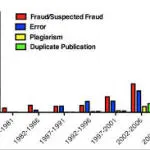
FraudThe bulk of the high quality empirical scientific research in finance and accounting  relies on large publicly available data which are often acquired by Universities at a substantial cost. Sometimes, researchers also use proprietary data to conduct their investigation and are successful in publishing their findings in high quality journals using confidential data. However, these studies are impossible to replicate because data are not publicly available.

Unfortunately, as we know from economic theory, reliance on proprietary (private) information (data) creates differential information environment which then leads to  moral hard problems and perverse behavior. A well-known accounting professor and noted scholar recently was found guilty of “fabricating” proprietary data which may have lead to dubious results. The top accounting academic journals retracted about 30 articles published by this individual who relied on questionable proprietary data to draw inferences about important and relevant auditing and accounting practices.

This anecdotal evidence is, and should be, a prime example why the cornerstone of high quality and rigorous scientific research is contingent on others being able replicate existing scientific findings.

For more details read the following article in Washington Post.

http://www.washingtonpost.com/news/morning-mix/wp/2015/06/30/citing-misconduct-accounting-journal-retracts-25-articles-by-once-renowned-scholar/

mailby feather

Assessing Financial Reporting Quality of Family Firms From the Auditors’ Perspective

Aloke GhoshNew findings by Dr. Aloke (Al) Ghosh that are being published in the Journal of Accounting and Economics.

Summary:  Because financial reporting quality affects audit risk, which determines how auditors price engagements, we analyze audit fees to extract auditor’s professional assessment of family firms’ reporting quality. Relative to non-family firms, we find that audit fees are significantly lower for family firms, which suggests that auditors view family firms as having superior financial reporting quality (i.e. audit risk is low). Because a fee discount might also be attributable to lower litigation risk, we analyze litigation data and find no reliable difference in auditor lawsuits between family and non-family firms. Finally, we provide corroborating evidence on the financial reporting quality of family firms based on three audit risk tests. First, using a financial reporting metric for audit risk, we show that audit risk is lower for family firms. Second, we show that the fee discount is lower for family firms with high audit risk. Third, using audit report lag as a proxy for audit effort, we show that family firm auditors work less to provide the desired level of assurance. Our findings provide compelling evidence in favor of the explanation that auditors charge less from family firms because of superior reporting quality, which lowers audit risk and, therefore, the need for greater audit investments.

View PDF

mailby feather

PCAOB says that larger accounting firms are doing a better job with their audits of internal controls

According to Helen Munter, director of the Division of Registration and Inspections at the Public Company Accounting Oversight Board (PCAOB), the largest public accounting firms made significant improvements in their audits of internal controls over financial reporting (SOX 404).  The improvements came as audit firms increased guidance and training for internal control audits, and demanded more proof from companies that internal controls were working. Internal control over financial reporting consists of systems and processes that deter corporate fraud and financial misstatements.

Deloitte & Touche LLP, was the first of the large accounting firms to have its 2014 inspection report released by the regulator this week. Deloitte’s report showed just 21% of audits inspected by the PCAOB had deficiencies — the lowest level in the past five years for the firm. However, the inspection report still cited several deficiencies in internal control audits, such as the auditor failing to properly test internal controls over billing rates and revenue.

For details, read the following article on the WSJ

http://blogs.wsj.com/cfo/2015/06/04/big-firms-getting-better-grades-on-internal-control-audits-pcaob/


mailby feather

SOX Compliance costly and continues to be a challenge for companies

Professor Al GhoshSarbanes-Oxley Act (SOX) was enacted almost thirteen years ago, yet companies continue to struggle with the compliance with some of the provisions of the Act. According to the latest annual Sarbanes-Oxley Compliance Survey by consultancy Protiviti, compliance with the law has been made particularly difficult. Some of highlights from the survey include:

  • The larger the company, the greater the SOX compliance costs. Overall internal compliance costs were more than $1 million for 58 percent of large companies during their last fiscal year. Almost all small companies spent less than $500,000.
  • Substantial changes in high-risk processes, baseline testing of IT reports, and entity-level controls have increased by about 10 percent.
  • Most companies use the new COSO framework.
  • 78 percent of companies are leveraging their compliance efforts to improve the business processes that affect financial reporting.

For further details, read http://www.accountingweb.com/article/sox-compliance-still-challenge-%E2%80%93-and-costly-%E2%80%93-many-companies/224754

mailby feather
Older posts Newer posts

© 2019 Aloke Ghosh

Theme by Anders NorénUp ↑