Category: Investment Industry

Amazing Amazon

Amazon.com, Inc., is an electronic commerce and cloud computing giant based in Seattle, Washington. The company was founded by Jeff Bezos on July 5, 1994. More than 20 years after going public, Amazon has a market cap of over $900 billion. In August it became the second company, after Apple, to join the $1 trillion-dollar club. According to Bloomberg, Jeff Bezos, the CEO of the company, has net worth more than $150 billion, which makes him the richest person in modern history.

Hedge-Fund to Amazing-Fund

After graduating from Princeton, Bezos began his career in D.E. Shaw, a hedge fund. He became a senior vice president after four years. However, he left the cushy job to start his own company Amazon.com. By the end of the first month, Amazon sold books to customers in every state within the US and to customers in 45 diverse countries.

Jeff Bezos continued to diversify Amazon’s offerings into the sale of CDs, videos, clothes, electronics, toys and more through major retail partnerships. The company went public in 1997.

Amazing Acquisitions

In August 2013, Amazon bought the coveted newspaper “Washington Post” for $250 million. His space company Blue Origin made history in 2015 when it became one of the first commercial companies to successfully launch a reusable rocket. His rocket company, Blue Origin, aims to reduce the cost of getting into space.

In August 2017, Amazon officially acquired Whole Foods for $13.7 billion.

Earlier this year, Amazon, Berkshire Hathaway and JPMorgan Chase delivered a joint press release in which they announced plans to pool their resources to form a new healthcare company for their U.S. employees. According to the release, the company will be “free from profit-making incentives and constraints” as it tries to find ways to cut costs and boost satisfaction for patients, with an initial focus on technology solutions.

Amazing Story: Rags-to-Riches

In July 2017, Bezos became the world’s richest person for the first time, surpassing Microsoft founder Bill Gates. At the time, his net worth was more than $90 billion. While Gates reclaimed his top spot shortly after, Bezos became No. 1 again after Amazon released its Q3 2017 earnings in late October. Now, he’s holding steady as the richest person in modern history.

Even though he is the founder and CEO of the company, Jeff Bezos’ salary is negligible—his annual salary in 2017 was around $1.69 million (salary was $81,840 and other compensation was $1.6 million). In contrast, the annual compensation of the CEO of Apple in 2017, a comparable company in size, was a staggering $102 million (salary was $3.06 million, bonus was $9.33 million, and stock compensation was $89.2 million).

Despite his dominant position in the company, as the CEO of Amazon, Jeff Bezos was making only 1.65% of what his counterpart was making at Apple.

Amazing Stock

In early 2010, Amazon stock was trading around $100. In September 2018, the stock is trading around $2,000. In a sort span of 8 years, the stock has sky-rocketed by 2,000%. Imagine that for a moment. If you had invested $10,000 in 2010, your investment today would be worth a staggering $200,000!!!

Is Amazon still a “buy” given the amazing run up of the stock? Wall Street experts believe so. Analysts’ consensus forecast for the stock is around $2,500 by 2020. Some Wall Street heavy-weights predict that this target might be achieved much sooner.

An amazing American account!

September 30, 2018

mailby feather

Centurion Auditor: Good or Bad?

General Electric (GE) has been courting negative publicity because of its questionable accounting practices. The maker of jet engines, light bulbs and MRI machines is being bombarded with lingering questions about its reporting practices.

In 2009, the SEC charged GE with accounting fraud and overly aggressive accounting practices, which lead to false and misleading statements to investors. GE paid $50 million to settle those charges without admitting to or denying wrongdoing.

Last year, the SEC started an investigation into the company’s accounting practices related to revenue recognition. The SEC investigation was expanded in scope following the reporting of $6.2 billion loss on its portfolio of long-term care insurance policies.

Who GE’s Auditor?

A centurion, KPMG is the external auditor of GE and they have been so for the past 109 years.

Regulators and media often hold the viewpoint that long-tenured auditors can become too close to a client, which erodes audit quality, while a new auditor can be more efficient in uncovering problems previously unidentified, which leads to enhanced audit quality. Many commentators and analysts believe that, in the case of GE, the auditor’s extensive tenure has jeopardized KPMG’s independence which ultimately questions the audit quality rendered by the firm. 

KPMG is part of an exclusive audit club, also known as the “Big 4” (others are E&Y, Deloitte, and PWC) revered for their professional expertise and commitment to independence. Yet, that pristine reputation has been lacking lately for KPMG—the firm has been chasing its own demons.

  • In the USA, six accountants, including former employees of PCAOB, were charged with leaking confidential data to KPMG. The SEC said the sensitive information helped KPMG clear regulatory inspections at a time when the firm was under pressure to clean up its audit record (akin to dishonesty in an exam).
  • In South Africa, KPMG’s South Africa division found the accounting firm had missed red flags in its auditing of companies owned by the Gupta family in that country. South Africa is arguably KPMG’s most important market in Africa, as it boasts the continent’s most industrialised economy, its biggest companies and its largest stock market (lacking independence).
  • In Canada, KPMG’S Canadian division is the subject of two complaints from one of the country’s largest financial worker’s unions. KPMG is charged with setting up offshore tax structures in the Isle of Man to help wealthy Canadians avoid paying taxes, which is against the profession’s code of conduct” (violation of professional code of ethics).

Shareholder Watchdogs

Shareholder watchdog groups worry that GE and KPMG may have become “too cozy” during their 109-year-old relationship. Both Glass-Lewis and Institutional Shareholder Services are urging shareholders not to ratify KPMG as GE’s auditor at the company’s annual shareholder meeting on Wednesday.

Ultimate Outcome

KPMG is most likely to continue to serve as the external auditor of GE despite widespread shareholder dissatisfaction with KPMG. The negative proxy votes not to ratify KPMG as the auditor satisfaction in annual shareholder meetings are unlikely to topple the audit firm. Why?

Under the current US regulations, only GE’s Audit Committee (a subcommittee of GE’s board consisting of independent members) has the ultimate authority to retain or dismiss auditors. The audit committee is also free to ignore how shareholders may feel about the auditor.

This is what we call “hullaballoo!”

May 8, 2018

mailby feather

Slumdog Millionaire May be a Destiny

For the year 2017, a well-diversified portfolio consisting of US public companies generates returns anywhere between 4% and 8% (S&P MidCap 400 gained 4%, Dow gained 6%, S&P 500 gained 8%). Quite impressive.

What about a more aggressive investor, or a more flamboyant hedge fund manager, seeking even bigger alphas/returns? Is there any country offering bigger equity returns than the US equity markets? Much of continental Europe generated relatively modest returns for the year 2017. While emerging markets may be more promising, the returns were no better than the US. Key indices in China and Brazil are up between 4% and 8%. Given the risk, the US seems a much safer bet.

There is one emerging market, however, that stands-out in 2017. India has outperformed most developed and emerging markets. Most key indexes in India are up more than 11%.

You Are My Destiny: Slumdog Millionaire

  • Roughly, half of India’s 1.2 billion population is under 25
  • The country, especially parts of the south, west and north, is entrepreneurial
  • While educating billion people remain a daunting task, much of the Indian population understands the value of good education
  • Low oil prices have been a blessing because India imports nearly 80% of its oil to sustain growth
  • In 2014, Modi, the leader of the conservative party, captured the imagination of Indians because his economic vision is tied to domestic investments and he intends to attract foreign investments by removing various barriers to foreign capital and by pledging to eradicate corruption.

Despite the promise of tomorrow, there is no denying that India today remains a poor country. Even relative to the other BRIC countries, its per capital GDP is about half of China and a third of Brazil.

World Bank Sings Jai-Ho for the Bengal Tiger

The World Bank projected the Indian economy to expand at a rate of 7.8% this year and 7.9% over the next two years. The continuing slump in prices of oil, which is one of the major imported commodities in India, had a significant effect on the Indian economy over the past one year. The Bank said: “In contrast to other major developing countries, growth in India remained robust, buoyed by strong investor sentiment and the positive effect on real incomes of the recent fall in oil prices .”

The World Bank estimates India’s growth projections to be higher than that of the Dragon Warrior. The Bank expects Chinese GDP growth to be around 6.5% over the next two years. Brazil and South Africa, the two other BRICS countries, are embroiled in major corruption scandals involving their leaders, which injects enormous uncertainty for investors. Russia seems determined to inject global anarchy into the world while disregarding the welfare of its own citizens.

Domestic Consumption

A distinct attribute propelling India’s economic growth is its appetite for domestic consumption. According to Adrian Lim, a Singapore-based investment manager with Aberdeen Asset Management, which manages $11.5 billion of assets in India, “India is being seen as a relatively resilient place to invest because quite a bit of the economy is driven by domestic consumption.” Moreover, Lim asserted “More than two thirds of the stocks listed (on the Sensex) are driven primarily by domestic demand, something you can’t see on the Chinese benchmark.”

India’s stocks reached a new highs recently powered by foreign funds. India’s bellwether S&P BSE Sensex broke a two-year-old closing record Monday as it rose to end trading at 29,910.22.

Exposure to India

How can US investors play India?

Consider investing in one of the top 5 India-based ETFs, as per the US News and World report (http://money.usnews.com/funds/etfs/rankings/india-equity?sort=category_rank).

#1                 iShares MSCI India                                                 INDA      $5.11 billion in assets

#2                 VanEck Vectors India Small-Cap ETF         SCIF         $0.32 billion in assets

#3                  IShares MSCI India Small-Cap                        SMIN       $0.19 billion in assets

#4                  PowerShares India ETF                                       PIN           $0.26 billion in assets

#5                  Columbia India Consumer ETF                       INCO      $0.12 billion in assets

The U.S. News Best Fit ETF rankings are designed to help long-term investors evaluate and compare the structure of exchange-traded funds. Since all ETFs are intended to track an underlying index (for a variety of equities, or the price of a commodity, for example), the rankings aim to identify large, liquid funds that perform reliably. The report also compares funds’ costs and the fund’s level of diversification and success in tracking its index. We discuss each of these measures in depth below.

Consider playing Danny Boyle’s Slumdog Millionaire!

Finland, June 8, 2017

mailby feather

Bite of the Big Apple

New York City or the “Big Apple” is the financial capital of the world—the city that never sleeps. Walk down the streets of Broadway, and you can hear someone humming the tune “New York, New York” immortalized by Liza Minnelli and Frank Sinatra. With access to Central Park, I believe a more appropriate label for New York City is the “Garden of Eden.” The trees in this Garden sustain life, support knowledge, and generate forbidden fruits. One serpentine bite of the forbidden apple and we are at the cross roads with Genesis!


Why was New York City baptized as the “Big Apple?”

Big Apple

In the early 1920s, “Big Apple” was a nickname for large monetary awards associated with horse racing contests, many of which were organized in and around New York City. The name was commercialized by prominent writers from the New York Morning Telegraph reporting on the City’s horse-racing. Because the city hosted important races, rewards associated with the races were substantial, which may explain the term Big Apple.

Big Apple was subsequently adopted by the City’s jazz musicians. An old saying in show business was “there are many apples on the tree, but only one Big Apple.” New York City being the premier place for jazz musicians to perform made it customary to designate New York City as the Big Apple.

The City in 1971 started a campaign to increase tourism and officially adopted the nickname Big Apple. The campaign featured red apples as reminder of the bright and cheery side of the City, in stark contrast to the common belief that New York City was dark and dangerous. Since then, New York City has officially been designated as the Big Apple.

Jobs’ Apple

What if a bite of the Big Apple eludes you? There is a solution to this biblical dilemma—own a piece of Steve Jobs’ Apple. Apple Inc. designs and manufactures computer hardware, software and other consumer electronics. The company is best known for its Macintosh personal computer line, iTunes media application, the iPod personal music player, and the iPhone.

The original logo of the company, which portrays a man sitting under an apple tree, draws on the Newtonian inspiration from a falling apple. Subsequently, Apple redesigned its logo depicting a bite of an apple. I believe the bite taken out of the Apple represents the story of Adam and Eve from the Garden of Eden with apple representing knowledge.

  • Holy Cash Cow

The company today is a colossal holy cash-cow. Based on data from the most recent financial statements, i.e., April 2017, the company has a cash balance including short term marketable securities of around $67 billion. If you add long-term marketable securities, the balance increases to nearly $260 billion, which is larger than the GDP of Greece!

What is the genesis of the cash balance? iSimple, high margins. The company’s gross profit margin is around 40%, which means for every $1 of sales, the company generates 40 cents of profit after deducting the cost of sales. The operating margins are equally staggeringly high (around 27%). Even after netting out all operating costs, the company generates $27 of profits for every $100 of sales. The sales for the first quarter of 2017 alone was $52 billion, a mind- blowing number.

  • Investments and Acquisitions

Apple is all about organic growth. The company is very frugal with its investments and acquisitions. Much of the excess cash is heavily invested in marketable securities (parking the cash and generating returns on those dollars). Its corporate investments, i.e, purchase of other companies or fixed assets, is rather modest at less than 5% of total assets.

  • Giving Back

What does the company do with its surplus cash balance? It pays dividend and buys back its own stock. Over the 6-months period ending April 2017, the company paid $6 billion as dividend. Over the same period, it repurchased $18 billion of its common stock. Thus, the cash returned to its shareholders was around $24 billion over a period of six months only.

No wonder shareholders are elated and appear flying on Elon Musk’s spaceship to the red planet. Over just under a year, the stock price of the company has increased from around $93 to $155, which translates into a 67% annual return. No legal business in the world can come close to generating these holy numbers.

If you cannot get a bite of the Big Apple, I suggest you consider a bite of the Apple company. Apple’s history is being cooked with a hint of exotic spices by its own “Cook.” The taste is simply divine.

Bon Appétit!

May 16, 2017

 
mailby feather

Hamiltonian Hip Hop: Broadway to Wall Street

Giddy up! At more than 21,000, the Dow Jones Industrial Index has soared by 1,200 points or about 13% since January 2017. If you consider the run-up since February 2016, the stock market has delivered a staggering return of about 30%. The stock market has been on the best winning streak in 25 years.

One fundamental reason for the stock market rally is linked to the growth of Exchange Traded Funds, or ETFs, as retail investors have poured in $124 billion into this type of an investment vehicle in 2017 alone.

State Street Corp.’s SPDR S&P 500 ETF is the market’s oldest, largest and the most-traded security in the world.

Love Thy ETF

Introduced in 1993, ETFs, or Exchange Traded Funds, trade on an exchange like stocks. An ETF is a marketable security that tracks an index, a commodity, bonds, or a basket of assets like an index fund. Unlike actively traded mutual funds, an ETF trades like a common stock on a stock exchange. ETFs experience price changes throughout the day as they are bought and sold.

ETFs typically have lower fees than mutual funds, making them an attractive alternative for individual investors. Shareholders do not have any direct claim on the underlying investments in the fund, instead, they indirectly own these assets.

According to research firm XTF, there are around 1,800 ETF investment vehicles holding stock worth more than $2.7 trillion. There are no SEC rules governing ETFs which means ETFs are regulated via mutual fund regulation. Just three firms

—     BlackRock Inc.

—     State Street Corp.’s State Street Global Advisors

—     Vanguard Group

manage 80% of ETF assets.

ETF vs Actively Managed Funds

  • ETFs try to track the performance of a particular market benchmark, or “index,” as closely as possible. In contrast, Actively Managed Funds (AMFs) try to outperform their benchmarks and peer group average.
  • ETFs buy all (or a representative sample) of the securities in the benchmark, while AMFs combine research, forecasting, and experience/expertise of a portfolio manager or management team.
  • Index funds tend to be more tax-efficient and have lower expense ratios than actively managed funds because they trade less frequently than AMFs.
  • Although AMFs attempt to beat the market, quite often they may also miss their targets which results in losses for the funds’ investors. In contrast, ETFs are only undertaking the underlying risk of the market benchmark.
  • Most importantly, AMFs typically charge between five and twenty-five times what ETFs charge their investors.

Not surprisingly, the pace of ETF inflows bodes negative news for asset managers. Investors have started pulling their investments from AMFs to ETFs. The largest providers of ETFs have started reducing management fees to attract even more funds. The average annual fee of ETFs bought this year is only $23 for every $10,000 invested, sharply lower than last year. Some ultralow-cost iShares Core funds cost as little as $4 a year for a $10,000 investment, which is can be about 1/25th fraction of the fees charged by most mutual funds.

Given the low-cost structure of ETFs and the raging bull market, $7.5 billion has moved into the iShares Core S&P 500 ETF and $5.4 billion into the Vanguard S&P 500 ETF in January 2017 alone!

Hamiltonian Hip Hop and ETFs

Lately, the US stock market has generated staggering returns unmatched by almost any other country. Take for instance the returns generated from an investment in S&P 500 stocks in the last eight years.

  • 2009                26%
  • 2010                15%
  • 2011                2%
  • 2012                16%
  • 2013                32%
  • 2014                14%
  • 2015                1%
  • 2016                12%

If you invested in the S&P 500 from 1928 to 2014, the per annum compound rate of return was 9.8%. Thus, if you invested $100 in 1928, your nest egg would become $346,261 in 2014.

Join and celebrate the US goldilocks economy and consider becoming an ETF shareholder.

Vermont, February 10, 2017

mailby feather

Mardi Gras Float in Trouble: First NBC

mardigrasIn the absence of major national banks in New Orleans, regional banks have floated the NOLA (New Orleans, Louisiana) economy. Through its wholly-owned subsidiary First NBC Bank, First NBC Bank Holding Company provides a wide range of financial services in New Orleans, Florida, and Mississippi Gulf Coast with 39 banking offices.

Following Hurricane Katrina, First NBC invested heavily in New Orleans construction projects that included generous tax credits established by federal and state governments. These investments collectively helped propel First NBC to become the city’s largest bank based on assets under the leadership of CEO Ashton Ryan.

Halloween Scare: Stress Test

The Federal Reserve Bank of Atlanta and the Louisiana Office of Financial Institutions informed First NBC on Oct 11 that the bank is under “troubled condition.”  As troubled bank, it must seek regulatory approval before adding any new directors or senior executives or changing the responsibilities. The bank is also prohibited from increasing its debt, distributing interest on subordinated debt or paying dividends on its stock.

To add to the stress, the Federal Deposit Insurance Corp. (FDIC) recently declared that First NBC is no longer “well capitalized,” restricting its ability to take on certain deposits and pay interest. First NBC was recently downgraded to junk status by Kroll Bond Rating Agency Inc., which specializes in rating smaller lenders. HoldCo Asset Management, which owns the banks’s debt has shorted the bank’s stock and as a way to hedge its risk against a bank default has also publicly questioned the bank’s accounting policies.

Uncle Sam’s Subsidies: Tax Credits

First NBC invested heavily in New Orleans in construction projects following Katrina and thereby benefited from the generous tax credits from federal and state governments. Because the tax credits received by First NBC were more than the taxes being paid, the bank was able to use the unused portion of the tax credits to reduce future tax payments by offsetting future taxes against the unused portion. For instance, if the government gives a $1,000 tax credit to a single parent for raising a child alone, and the parent must pay $800 as federal income taxes based on his/her income, the parent does not pay any taxes for the current period because the tax credit fully offsets the $800 taxes payable for the current year. More importantly, even after the tax offset, the remaining $200 tax credit balance can be used to reduce future taxes.

Accounting rules allow this $200 future tax benefit to be capitalized (i.e., treated as an asset) and booked as a deferred tax benefit. As of the first quarter of 2015, the bank’s deferred tax assets—the benefits from reduction of future taxes—are $247 million, up from $95.8 million a year earlier.

In 2014, the company reported $28.6 million as income before taxes yet it reported a net income of $55.6 million because it had an income tax benefit of $27 million (instead of having an income tax expense which normally reduces net income).

Mardi Gras Float in Trouble: Recanting Previously Issued Statements

First NBC announced in August 2016 that it expects a delay in filing its 2015 Form 10-K (annual report filing with the SEC) because of restatement of previously issued financial results! The prior results included errors because of the following reasons:

  • Use of an inappropriate amortization method in accounting for investments in tax credit (Halloween Hullaballoo)
  • Consolidation of certain investments in Federal Low-Income Housing Tax Credit entities because such entities were determined to be variable interest entities in which the Company was the primary beneficiary (Enron Phantom).
  • The result of the consolidation has adverse effect on the financials (Hurricane)

Following the error corrections, the 2014 net income was now being restated (or reduced) by 20% ($55.6 million being revised to $44.7 million). Similarly, the 2013 net income was being restated (or reduced) by 18% ($40.9 million being reduced to $33.6 million). Accumulated earnings for 2012 and prior periods was being reduced by 16% from $59.8 million to $50.3 million. The company in its 2015 10-K stated “We determined that we had insufficient qualified personnel at both the executive management and staff levels with appropriate knowledge, experience and training on accounting and reporting matters, which contributed to the material weaknesses that resulted in the restatement, as well as the inability to timely file this report.”

To make matters worse, the bank was in violation of NASDAQ listing rules because it had not filed its 2016 quarterly statements. To avoid delisting from NASDAQ, First NBC submitted a plan to regain compliance with Nasdaq’s listing rules.

In a time-span of less than a year, the stock price of First NBC declined from a high of about $40 to around about $5.30, which is a cyclonic decline of around 86%. More than $600 million in shareholder wealth was destroyed because of the accounting related aggression.  

Grateful Dead Sings Aiko Aiko Ande

Ernst & Young (E&Y), a Big 4 auditor with international reputation and stature, has been the independent auditor of First NBC leading up to the 2015 financial statements. First NBC’s restatement is likely to bring considerable negative publicity, media scrutiny and regulatory intervention for E&Y. It will not be surprising to see class action lawsuits initiated by shareholders to recover losses.

In September 2, 2016, Ernst & Young declined to stand for reappointment as the company’s independent auditor for 2016. Is it a case of too little too late? A restatement is considered an audit failure.

Did E&Y fail the shareholders of First NBC? Only courts and the SEC can render a verdict on this matter. Until then, the accounting profession sings “Aiko Aiko Ande” in Cajun style.

 My spy boy saw you spy boy sittin by the bi-yo

My spy boy told your spy boy, Im gonna set you flag on fi-yo.

I said, hey now, hey now, Aiko aiko all day, jockomo feeno na na nay, jockomo feena nay.

My grandma and your grandma were sitting by the fire

Said my grandma to your grandma, gonna get your tail on fire.

Chatham- Helsinki; October 30, 2016


mailby feather

Drugs and the Land of Lords

fdaIndia has become a dominating player in the production of generic-drugs particularly targeting the large U.S. market. Indian drug manufacturers account for 40% of generic drugs sold in the U.S. While most Indian pharmaceutical companies continue to make their money selling inexpensive generic drugs, there is a visible change in their strategy over the last few years. Indian generic-drug manufacturers have started competing intensely to develop their own products through heavy R&D spending and finding solutions to many illnesses and diseases.  

Motivated by the desire to produce innovative and patented drugs, Indian pharmaceutical companies have started applying for drug approvals with the U.S. Food and Drug Administration (US-FDA) at an unprecedented rate. Approximately, a third of all FDA applications in the last year were submitted India’s multibillion-dollar pharmaceutical industry. A year ago, the growth in application was only 19% which means the growth rate between the two consecutive years has almost doubled.

Why the Change in Strategy?

Generic drug business (production and sales) entails making money through large volume. Margins are low because there is heavy competition from other generic drug producers. Think of grocery stores as an analogy. In contrast, patented drugs generate high returns for the producer because they are the only producer, i.e., volume is high, and margins are high because they act as a monopolist (sole producer). Think of the diamond business and DeBeers as a parallel.

Medical innovation in drugs requires considerably investments in R&D with initial outlays exceeding millions, and sometimes billions, of dollars. However, following the successful development of a drug, a pharmaceutical company must first procure a patent before the drug can become a commercial product.

Patent

The economic idea behind a patent is simple. The government wants the private sector to invest and innovate in the field of medicine and find cure for illnesses. However, because the cost of finding a cure for human ailments can be prohibitively costly, the government offers through a patent a “protection period” for a drug company to sell its drug over a certain period, which is typically 20 years in the U.S.

As a result of the patent, only the pharmaceutical company holding the patent can manufacture the drugs being approved by the FDA. Therefore, in essence the drug manufacturer with a patent is akin to a monopolist, which means it can charge an exorbitant price (think of the recent Mylan case). High prices result in high profits because the cost of production is generally low. The higher profits allow the drug manufacturer to recover the initial investment in R&D and thereafter make a ‘healthy,’ and sometimes super-healthy, return.

Humans benefit, we get to live longer and are able to become more productive, which means that society benefits but all this comes at a step price. Some drugs can cost between $10,000 to $30,000 per dosage (e.g., cure for AIDs or cancer)!

Prominent Manufacturers

India’s largest drugmaker by sales, Sun Pharmaceutical Industries Ltd., received approval for an eye drop to treat swelling and prevent pain in patients undergoing cataract surgery. In 2014 it received approval for a new injection to treat a rare blood disease known as myelodysplastic syndrome. However, to receive these patent approvals, the company had to invest heavily in R&D. The company’s R&D outlay increased from about $50 in 2011 to about $261 million in 2015, which is more than a 400% increase in a span of 4 years or about 100% annual growth.

Dr. Reddy’s Laboratories, India’s second-largest drugmaker by sales, received FDA approval for a spray for treating a skin condition called plaque psoriasis, as well as an injection for migraine headaches. The company similar increased in R&D from $50 in 2011 to $253 million in 2015, which again translates into a 100% annual growth.

Lupin increased its R&D spending by 17% to $168 million in 2015. The company is  developing an injection to treat less common cancers and a nasal spray to better deliver off-patent drugs to treat some types of pulmonary diseases. The company’s U.S.-based laboratories in Florida and New Jersey are also working to improve AllerNaze, according to Wall Street Journal.

Cost versus Benefit

Dr. Reddy’s Lab spent about $25 million in developing its migraine injection and was able to get it from concept to market in less than five years so the gestation period can be long. However, the company predicts that it expects to earn more than $100 million in annual sales from the migraine injection and skin spray.

A 20-year patent period means that the sales over the duration of the patent period would generate about $2 billion sales. The “bottom line,” it pays to invest in R&D for a company and switch from generic production to patented products. But, the company must first succeed in its innovation efforts otherwise all the investment is lost, which is the typical risk associated with R&D investments.

Chatham, Feb. 29, 2016; 11.22P

http://www.wsj.com/articles/indian-drugmakers-target-niche-markets-1461024100

mailby feather

Van Guarding your Assets: US Market The Best Bet

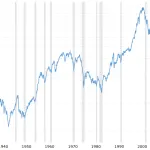
sp_chartThe annual return for investing in the U.S. stock market over the last 50 years has been around 7-8%. How can one explain this remarkable growth in the U.S. stock market? The Sage from Omaha, Warren Buffett, has a lucid and precise response. The U.S. economy, as measured by gross domestic product (GDP), has been growing, and is expected to grow, at an annual rate of about 3%. The inflation is about 2 to 3% which pushes nominal GDP growth to 5-6 %. Stocks pay about 1-2 % of dividend which increases the growth rate to about 6-8 %.

If you were fortunate enough to have invested during the bull market, i.e., 1982 to 1999, the S&P 500 Index, a common benchmark for U.S. stocks, would have crowned you with returns of about 18 percent per year. You surecannot beat these numbers unless you happen to be the humanitarian George Clooney with the reliable Ocean’s Eleven to back you up!

Risk

So where is the risk if you make 6-8% each year when the period is dull and about 18% during the bull period, which is no bull.

While these numbers are average returns, for some decades you could have easily lost money (e.g., 1970s and 2000s). Sadly, more than half the adult American population gets deprived of the “vintage bourbon” offered by the US equity market. Only 48% of adult Americans have a claim on the returns offered by the US stock market, which is such a travesty. A considerable majority has foregone the benefits of the goldilocks economy.

The Best Bet

The stock market remains the best bet for growing and preserving your financial assets. If you invested in Certificate of Deposits (CDs) with banks, you would earn about 7% in the early 1990s and about 1-2% in the last 5 years. If you invested in government bonds, which is only possible via an authorized stock broker, you would have earned between 2 and 6% in the last 30 years. If you had invested in AAA corporate bonds, you would have earned between 3 and 6% per year.

Clearly, the US stock market offers the best returns in the long run with very little risk when the investment horizon is sufficiently long.

The Van Guard(ing) your Assets

The million-dollar question for your million-dollar investment is what stocks do you pick or what fund/portfolio-manager do you choose?

The relatively safest and least costly method is to pick an index mutual fund. Instead of hiring fund managers to actively select which stocks or bonds the fund will hold, an index fund buys all (or a representative sample) of the securities in a specific index, like the S&P 500 Index. The goal of an index fund is to track the performance of a specific market benchmark as closely as possible, which is why index funds are also referred to as a “passively managed” fund.

The all-time favorite financial company offering index funds happens to be Vanguard Group because they charge very little commission or administrative fee for managing your assets. Vanguard’s 500 Index Fund started business with $11.3 million in assets. Today, the same fund holds more than $252 billion, i.e., the Fund’s assets grew by around 23,000 times.

By investing in the Index Funds like the S&P 500, you must calibrate your expectations. You should not expect staggering returns from investing in a few darling stocks like Tesla or Amazon or Apple. Why? Because those are much riskier bets. You sure make money when the market loves those stocks, but you could also lose your shirt when the market turns its roving eye towards other more attractive beauties. By investing in the Index Fund, you have committed yourself to getting whatever returns the market offers which, in this case, happens to be returns on the S&P 500 index.

Alpha-Males

Some would advise that you seek “alphas” by investing your money in hedge funds or mutual funds choreographed by “superstar” portfolio managers. While this seems like an attractive proposition, chasing these types of funds or portfolio managers can be akin to making a million through lotto tickets. The odds are heavily stacked against you; you might as well give your money to some charity.

There is another caveat. Superstar managers and high profile mutual funds will charge you a bulky administrative fees (> 1%). In addition, you must pay about 20% performance fees, especially to hedge funds.

Possible because of the realization that it is impossible to beat the market consistently over the long run (academics have been saying this for more than 30 years), or for the fear of paying exorbitant fees, index funds have grown in astounding popularity. From their start at $11 million in 1976, index funds grew only to $511 million by 1985, and thereafter expanded more than 100-fold over the next decade to $55 billion in 1995. Their assets hit $868 billion by 2005, and the future still looks very bright so you need wear shades.

Are you ready to invest in the stock market and Index Funds to help grow your financial assets. It sure beats any other form of legitimate financial investment.

Chatham, September 20, 2016; 11A

http://blogs.wsj.com/moneybeat/2016/08/31/birth-of-the-index-mutual-fund-bogles-folly-turns-40/

mailby feather

A Sach of Gold for the Common Man

gs_logoArguably the best financial company in the world, for almost 150 years, Goldman Sachs has served the financial needs of wealthy individuals, corporations and rich sovereign nations. Their business activities include investment banking, serving the financial needs of institutional clients, investing and lending, and wealth management. Because of their ability to attract top talent and pay handsome compensation, their payroll includes the best and the brightest talents that money can buy.

Goldman’s clients include high-net-worth individuals, families, foundations and endowments. What is the Gold standard for a high-net-worth client? Let us start with any positive number followed by a minimum of 7 or 8 zeros. Six zeros may be too modest an amount to get the attention of the Wall Street luminary. What remains indisputable is that Goldman’s business interests do not hinge around a “commoner” with modest income.

Low and behold, the company has decided to rebrand its uppity image. The financial behemoth is now in the online savings-banking business and eager to attract savings deposits as meager as $1. A cataclysmic metamorphosis.

Avant-Garde Acquisition

Recently, Goldman Sachs acquired GE’s internet-banking subsidiary with a total of $16 billion in retail deposits to get a foothold into the online banking business. The company’s online banking business called ‘GS Bank’ is keen to attract even more deposits by offering generous interest rates regardless of the amount deposited.

Online versus Traditional Banking

Traditional banks require an average of above $4,000 in average daily balance for not charging any monthly maintenance fee. Also, a checking or savings account typically pays between 0 and 0.1% in annual interest rate. The benefit is that the deposits are insured up to $250,000 by FDIC regardless of the financial health of the bank, which is intended to avoid a bank run. However, depositors pay a steep price for the benefits of a traditional bank. Customers are slapped with all types of fees/charges and the interest rates on the deposits are measly.

The online banking has changed the thrifty culture of the traditional banks. Normally, online banks do not require a minimum deposit (e.g., CapitalOne 360, Discover bank). Some online banks offer free checking facilities. More importantly, as any traditional bank, the online deposits are also insured up to $250,000 assuming that the online bank is registered with the FDIC (the online page will indicate whether it is the case). Because online banks do not operate physical locations, they do not incur the high costs of managing a network of branches. Consequently, online banks can pass on some of their cost savings to depositors in the form of higher rates.

GS Bank is offering annual interest of 1.05% for all deposits without any minimum balance and time restrictions. CDs are paying around 1.20% for one year term deposits. Compared with borrowing on the bond market, however, it is cheap.

Benefits to Goldman from Online Banking

To finance its investments, Goldman Sachs must borrow from the bond market. The interest rates in the bond market are much higher (between 3% and 4%). Therefore, assuming a constant rate of return on their investments, there is a 2%-3% spread from acquiring funds at a cheaper rate.

Based on its 2015 annual reports (FORM 10-K), Goldman has $97.519 billion in deposits. Additionally, it has 42.787 billion in short term borrowings. If Goldman can replace all of its short term loans with online banking deposits, an extreme case scenario, the annual interest cost savings generated would be around $1.3 billion. Assuming that the savings are in perpetuity, the present value of the cost savings using modest discount rates is around $13 billion. Because presently there are 426.4 million shares outstanding, the potential cost savings alone could generate a pop in the stock price by $30.

As a common Man, are you ready to invest in a Sach of Gold?

Helsinki, Finland, August 5, 2016.

mailby feather

Academics and Central Banks

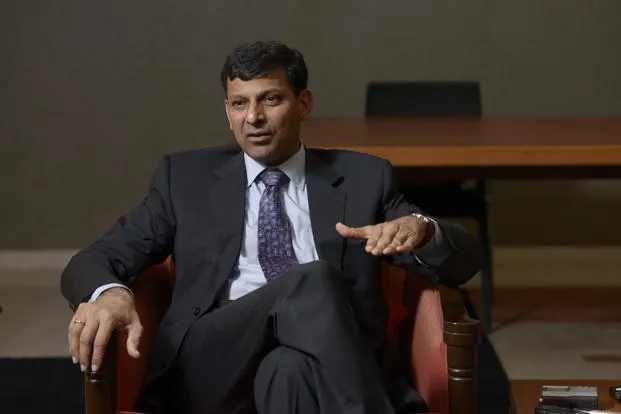
raghuram_rajan--621x414A central bank is a public institution charged with managing a country’s monetary policy and regulating member banks. The main objective of a central bank is price stability. By statute, many countries also require their central banks to support full employment. Governments often appoint influential academics as the Chair/Governor of the Central Bank. Ben Bernanke, Professor at Princeton University, served as the Chair of the Federal Reserve, the Central Bank in the U.S., from 2006 to 2014. Stanley Fisher, a prominent macro-economist from MIT, served as the Governor of the Bank of Israel from 2005 to 2013. An academic staff at Trinity College Dublin, Philip Lane was appointed the Governor of the Central Bank of Ireland in 2015.

In 2013, India’s then Prime Minister, Dr. Manmohan Singh, invited Raghuram Rajan, a high profile financial economist and a Professor at the Chicago Booth School of Business, to become the Governor of the Reserve Bank of India for a three-year term. When Dr. Rajan took over the reins of India’s monetary policy, India was grappling with high consumer price inflation, industrial slowdown, a free falling rupee, and a widening current account deficit.

Key achievements

During his short tenure span of three-years, Dr. Rajan is credited to have

  • Strengthened the Indian currency.
  • Boosted investor sentiments.
  • Contained the current account deficit from around 5% to around 1.9% by levying added import duty on gold.
  • Reduced inflation to 8% from 11%.
  • Established the “Joint Lenders Forum” to foster greater coordination among bankers and discuss every loan decision above Rs. 5 Crore in forum so that bad loans can be prevented.
  • Forced the recognition of non-performing loans (bad loans).

Non-Performing Loans

Mr. Rajan’s priority was to purge the banking system of bad loans by forcing banks to remove non-performing loans from their balance sheet. The de-recognition of bad loads forebodes bad news for banks because they would need to recapitalize the balance sheet if their equity cushion fell below the mandated levels. Moreover, banks would be forced to call out the bad players.

In country that wants to open up the economy, India has 27 government-controlled banks which account for 70% of the country’s banking assets. Much of the bad bank loans are confined to India’s state-owned banks. According to the Economist, nearly 17% of all loans need to be written off. Therefore, the problems of bad loans are quire severe.

Colliding Politics and Personalities

The Modi government, which came to power with a huge mandate in 2014, has had major disagreements with Dr. Rajan’s economic policies. The current government is more ‘dovish’ and prefers a low interest rate environment to spur domestic investments while electing to ignore the risk of higher inflation from pursing an aggressive monetary policy. In contrast, Mr. Rajan was more ‘hawkish’ on inflation and, as a result, he was more focused on controlling inflation by keeping the interest rates high even at the cost of choking potential investments. Also, the Central Bank’s aggressive policy to recognize bad loans may have contributed to the disagreement between the government and the governor of central bank.

The current BJP party is led by a charismatic leader who is predisposed to governing with an iron hand. The top gun of India’s Central Bank was also a high-powered intellectual, a renowned economist, and a man with strong economic convictions. Fireworks are inevitable!

The Outcome

After some modest ideological confrontations with the BJP party, Dr. Rajan abruptly decided to step down as the Governor of the Reserve Bank of India and not seek a second term. CNBC deems Mr. Rajan as the world’s best central banker because of his commitment to structural reforms and because of his ability to stabilize prices and exchange rate during his short term. Did he deliver? The market believes so!

Unfortunately, India is the big loser in this Bollywood-style drama. The country is deprived of the services of a financial superstar who could have guarded financial markets and helped the Indian government pursue pro-market reforms.

Helsinki, July 25, 3.36P

http://www.economist.com/news/leaders/21699911-proposed-reforms-indias-financial-system-are-welcome-insufficient-banks-and-bureaucrats

mailby feather