
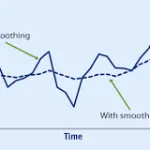
 Brixmor Property Group Inc., the country’s largest owner of grocery-anchored shopping malls, disclosed that its key personnel were directly involved in “smoothing income” items between reporting periods in quarters dating back to 2013. The changes amounted to $500,000 for 2014 and $300,000 for 2015. A spokesperson for the company said Reuters “We have zero tolerance for unethical behavior at the companies we invest in. While the dollar amounts involved were small, the principle is not. Fortunately, the business remains solid,”
Following the announcement of accounting fraud, Brixmor disclosed that its CEO, President and Chief Financial Officer, Chief Accounting Officer, and an accounting employee had resigned. These related announcements sent the stock price of the company plummeting by more than 25%.
Company Background
Brixmor Property Group Inc., (NYSE: BRX), is a real estate investment trust that is headquartered in New York City. The company owns and operates the largest wholly owned portfolio of grocery-anchored community and neighborhood shopping centers in the U.S., with more than 520 commercial real estate properties located across 38 states. The company’s shopping centers feature grocers, retailers and local retail brands. Brixmor was taken public in 2013 by Blackstone Group, which remains its largest shareholder.
As of 2014, Moody’s assigned Brixmor a Baa3 credit rating, which the company intends to use to acquire new sources of capital in unsecured credit market.
Why “Smooth” Income
My own research (see Ghosh, Gu and Jain, Review of Accounting Studies 2005), and those of others (see, Barth, Elliott and Finn, Journal of Accounting Research 1999), show that investors reward companies handsomely for reporting sustained increases in earnings over consecutive quarters. When companies are able to meet or beat prior period benchmarks, which include prior period earnings or analyst expectations, investors consider earnings to be of high quality, i.e., earnings are expected to persist into the future. High quality of earnings also indicates lower risk because earnings are perceived as being less volatile. Both arguments suggest a surge in stock price.
Think of General Electric (GE) under Jack Welsh. As of fiscal year 2000, GE had reported 100 consecutive quarters of increased earnings from continuing operations. During the 90s decade (1990 to 2000), GE stock price had increased from around $5 to $60 (on an adjusted basis), which is a staggering 1,200% growth (or a 25% growth in stock price per annum).
Why the Decline in Stock Price
One explanation could be that the company might have to restate its prior period financial statement from the accounting fraud. However, this is not the case. The company reported that it does not expect to restate its financial results because impact of the accounting manipulation was immaterial to its performance. Further, the company believes that it will not impact the Company’s compliance with the financial covenants in its debt agreements.
A more realistic explanation is that the company will now become the target of several class-action lawsuits for violating federal securities laws by issuing misleading information to investors. For example, Hagens Berman Sobol Shapiro LLP, a national investor-rights law firm, is investigating whether to file a class action lawsuit based on the current information. Similarly, Scott and Scott, Attorneys at Law, LLP, a global investor rights law firm, is also investigating Brixmor for possible securities fraud.
Past studies show that the amount of settlements from class action lawsuits are economically large – a cost which is ultimately borne by investors!
February 10, 2016; 5.58A
http://www.reuters.com/article/us-brixmor-accounting-idUSKCN0VH13P

 by
by 
Leave a Reply