
CategoryFinancial Reporting

GE, The Illuminati

Illuminati-Logo---BlackGeneral Electric, the giant American industrial conglomerate, filed its 2015 annual report (10-K) with the Securities and Exchange Commission (SEC) on February 16, 2016. The annual report document contains 276 pages of text, numbers, tabular presentations and pictures. Large accelerated filers, or large public companies, are required to file their annual financial reports, also termed as Form 10-K, within 60 days of their fiscal year-end unless they are smaller public firms in which case they have either 75 days (accelerated filers) or 90 days (non-accelerated filers) to file depending on their market capitalization.

In an effort to make annual reports more understandable to investors, in a game-changing disclosure strategy, the company released its first ever “Integrated Summary Report.” The key objective is to provide a comprehensive yet concise view of the company using the lens of the Board and management. The compact report contains only 66 pages with pertinent information from several mandated documents including 10-K, proxy statements, and sustainability report. The document establishes links between strategy, performance, board oversight, compensation and sustainability but it remains outside the realms of the heavily regulated financial reporting.

The Illuminati

Navigating through any 276-page document can be challenging for an individual, let alone one that is derived from a complex set of accounting rules and regulation. The Chairman and CEO of General Electric, Jeff Immelt, said “our priority is to provide meaningful information that all investors can readily access. For investors to make investment and voting decisions, we don’t believe that more information is necessarily better. Instead, we’ve challenged ourselves to provide better information. Over the past several years, we have already been enhancing our reporting in response to feedback from investors, and they have told us how much they like it. This year, we are taking it even further.”

According to a GE spokesman, investors downloaded the integrated and summary report 2,300 times in the first 24 hours after it was published. In contrast, GE’s combined downloads of its 10-K and proxy reports 24 hours after they were filed last year were only 638.

Contents

The integrated summary report includes a discussion on the following subjects:

  • Chairman’s Letter
  • Strategy and results
  • GE’s Businesses, Portfolio & Capital Allocation
  • Margins and Financials
  • Risk, Governance and Compensation
  • Audit
  • Shareowner Proposals
  • Sustainability
  • Annual Meeting
  • Forward-Looking Statements

 Simplification

It remains uncertain whether other large companies will follow GE’s pathway and start disclosing similar condensed annual reports. The SEC has been deliberating ways to simplify financial reporting so GE might become the vanguard of simplified annual reporting.

New York, April 7, 2016; 2.40P

http://www.ge.com/ar2015/integrated-report.

mailby feather

Bank Bets on Black Gold Going Bad

BankThis year, S&P 500 financial stocks have fallen by more than 10%. Banks stocks have been hit even harder. What may appear as counter-intuitive is that banks stocks have taken a bigger beating than oil or energy stocks. Deutsche Bank stock has lost more than 30%, Unicredit stock is down 35%, and Credit Suisse is 30% down. Barclays, BNP Paribas, Societe General, and UBS have all lost about 20% of their values. Why?


Common Justifications  

One explanation is linked to the low interest rate environment. Low interest rates in most major economies are cutting into banks’ profit margins. To compound banks’ problems, investors are not expecting a change in the interest rates anytime soon. However, this is hardly a new explanation. Low interest rates have been descriptive for most major economies which is why investors are unlikely to react now to low interest rates.

Another explanation is linked to banks facing tougher regulations, which is why they may be forced to scale back on their investments. However, the current regulatory environment is very similar to the regulatory environment since the post-financial crisis period. Therefore, regulation is unlikely to be a key factor explaining current decline in banks’ stock prices.

Bank Loans to Finance Oil and Gas

There is another compelling explanation. Many banks invested heavily in oil production in North American companies when oil prices were high. Over the last five years, oil and gas companies in the United States and Canada have issued bonds and taken out loans that are together worth more than $1.3 trillion, according to Dealogic. Over the past five years, global banks have earned around $31 billion in fees by financing energy-company stock sales, borrowing and mergers-and-acquisition transactions.

However, the collapse of crude oil, or black gold, prices have turned the tables on banks. Profitable investments are now turning sour. The precipitous and sustained decline in energy prices is resulting in major economic losses for the banks as the oil and gas companies are unable to generate sufficient operating cash flows to meet their obligations.

In 2015 alone, at least 42 North American oil companies have filed for bankruptcy which is bad news for banks that loaned money to these oil companies.

Accounting for Bad Loans

Under GAAP, companies must book an accounting loss in the current period (known as “loan-loss reserves”) if they expect future loan defaults because of a decline in the credit worthiness of the debtor company. The largest banks in the U.S. including Wells Fargo, J.P. Morgan Chase, and Citigroup have been setting up large reserves as it becomes more and more apparent that many outstanding loans are unlikely to get repaid.

Wells Fargo & Co. set aside $1.2 billion in reserves for potential losses tied to oil and gas loans. Recent SEC filings indicate that, although about 2% of its overall loan portfolio is in oil and gas companies, more than 10% of the company’s loan-loss reserves are related to oil and gas. In 2014, the bank was unsure whether it would be able to collect $76 million of the loans extended to oil and gas companies. In 2015, the bank estimates that number to be around $844 million, an increase of more than 10 times.

Similarly, J.P. Morgan Chase disclosed $44 billion of total energy exposure to their loans. Bank of America Corp. said that it had about $22.6 billion in unfunded energy loans. Smaller banks are facing similar predicament.

European banks are not far behind. Banco Santander, eurozone’s largest bank by market value, booked €1.6 billion ($1.76 billion) losses for the fourth quarter of 2015. The losses included a €435 million charge for “goodwill” and “other items.”

The Future

If oil prices remain low for a prolonged period of time, expect more loan defaults in the future by debtor companies from the energy sector. This in turn is going to adversely affect the future performance as banks increase their losses from nonperforming loans or book credit losses.

One expectation is that oil prices and bank stock prices are likely to positive correlated, at least in the short run.

The moral of the story is beware of bank stocks – they are risky bets under the current economic environment.

March 13, 2016; 9.04P

http://www.nytimes.com/2016/01/20/business/oil-market-tests-banks-ability-to-weather-losses.html?_r=0

http://www.wsj.com/articles/banks-struggle-to-unload-oil-loans-1426728583

mailby feather

Abusing the Accounting Matching Principle

matchingCompanies have incentives to recognize revenues but not the costs associated with generating those revenues because doing so allows them to report inflated income for the current period. Under US GAAP, companies are required to “match” revenues with costs in the same period so that current earnings are an accurate predictor of economic income. Monsanto, a large multinational agricultural public company, did exactly what it was not supposed to do. It violated the most fundamental accounting rule—the matching principle. The company was eager to recognize revenues but not the costs associated with generating revenues.

The Securities and Exchange Commission (SEC), the Robocop patrolling Wall Street and the guardian angel of the average investor, charged Monsanto of misstating earnings because the company failed to properly account for the costs of sales associated with its flagship herbicide product “Roundup.” Monsanto agreed to pay $80 million in penalties. It is one of the largest accounting-related settlements by the SEC since Mary Jo White took over as the Chair of the Commission in 2013.

Accounting Abuse

One of Monsanto’s flagship and highly profitable products is a weed-killer herbicide named Roundup. Because of intense competition from generic products, and possibly facing the prospect of a sharp decline in profits, Monsanto introduced an aggressive rebate program from 2009. Under the program, the company would offer steep price reductions on the product, or pay a rebate on the product in subsequent years, if retailers and distributors met certain sales goals. In 2010 alone, Monsanto paid $44.5 million to its two largest distributors as a rebate for meeting the sales goals of Roundup for its past rebate programs.

The accounting problem was that Monsanto was recognizing revenues from the sale of Roundup but it failed to include an estimate of the cost of the rebate that would be paid to its retailers/distributors in future periods. Because the rebate contributed to the sale of Roundup for the current period, the company is required to include rebate estimates in the current period. The company possibly deferred recognizing the rebate costs to future periods when cash was being paid which violated the matching principle and the fundamental “accrual” notion of accounting.

Penalties

In addition to the company fine of $80 million, three Monsanto accounting and sales executives agreed to pay penalties to settle individual charges against them. The SEC found that two certified public accountants (CPAs) at Monsanto either knew or should have known that Monsanto was improperly documenting costs tied to the program and were suspended from practicing as accountants of public companies.

Monsanto neither admitting nor denied any wrongdoing but agreed to hire a consultant to review its financial reporting of the rebate programs. Based on the review, the company disclosed that it was going to restate its earnings from 2009 to 2011.

Monsanto’s CEO, Hugh Grant, reimbursed the company $3,165,852 for cash bonuses and stock awards received during the period. It is not surprising or unusual for CEOs to pay back their incentive compensation if the company has accounting related misreporting. Under the “clawback” provision of the Sarbanes-Oxley Act of 2002, executives are required to pay back compensation during periods when accounting misstatements occurred, even if the executive was not directly engaged in the misconduct.

Ms. White said “Corporations must be truthful in their earnings releases to investors and have sufficient internal accounting controls in place to prevent misleading statements…. Failing to recognize expenses related to rebates is the latest page from a well-worn playbook of accounting misstatements,” she said.

Costs of Accounting Manipulations

The stock price of Monsanto has gone down from a high of $120 to a current price of around $90 which is a 25% decline. With total shares outstanding at 536 million, the magnitude of the total loss to shareholders is a staggering $16 billion in just one year. As always, ultimately, investors and shareholders lose from accounting abuses.

February 27, 2016; 3.55P

http://www.nytimes.com/2016/02/10/business/dealbook/monsanto-to-pay-80-million-to-settle-charges-of-improper-accounting.html?_r=0

mailby feather

Banks Banking on Their Debt

BankUnder the “Fair Value Option,” accounting rules allow a bank to book income when its debt has declined in value should they elect fair value accounting for their debt. Once adopted, the decision is irreversible.

Now consider a bank whose financial health has been deteriorating (a decline in credit ratings or an increase in credit default swap spreads). Under accounting rules, a financially constrained bank would record an accounting gain! Therefore, other things remaining unchanged, a healthy bank would report a loss on the income statement, while an unhealthy bank would report a profit on the income statement. Very counter-intuitive.    

Prominent Example

In 2011, JP Morgan Chase in its third quarter earnings reported a whopping $1.9 billion pretax gain because of debt valuation adjustments (DVA), i.e., it recognized a gain because the market value of its publicly traded debt had decline in value. Similarly, in the first quarter of 2012, Morgan Stanley ’s earnings were reduced by nearly $1.5 billion in losses which were tied to this rule. In the third quarter of 2011, the bank had a gain of $2.1 billion because of debt valuation adjustments. In the nine months of 2015, Morgan Stanley recorded a gain of $477 million related to the DVA rule.

You can notice the volatility in earnings that results from valuing debt at fair value. Moreover, the recording of the debt value adjustment on the income statement made it difficult for investors to value a bank’s earnings.

Background

In 2008, when the accounting rule first came into play, which coincided with the financial crisis, banks were only too keen to adopt the fair value option for valuing their own debt. This is because, with overall deteriorating health, banks were able to mask their economic performance by booking a large accounting gain which arose from a decline in the market value of their own debt.

The Great Escape

Based on investor feedback, the US accounting rule-making body, FASB, is finally giving banks an “opt out.” Going forward, if a bank elects to adopt fair value accounting to value its own debt, it does not have to report any gain or loss from decline or rise in its market value of debt on its income statement. Instead, the gain or loss related to debt valuation adjustment is to be reported under “other comprehensive income,” which is not included in the income statement.

Accountability of accounting in banks!

February 16, 2016; 4.30P

mailby feather

Cost of Corporate Crime

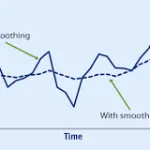
indexBrixmor Property Group Inc., the country’s largest owner of grocery-anchored shopping malls, disclosed that its key personnel were directly involved in “smoothing income” items between reporting periods in quarters dating back to 2013. The changes amounted to $500,000 for 2014 and $300,000 for 2015. A spokesperson for the company said Reuters “We have zero tolerance for unethical behavior at the companies we invest in. While the dollar amounts involved were small, the principle is not. Fortunately, the business remains solid,”

Following the announcement of accounting fraud, Brixmor disclosed that its CEO, President and Chief Financial Officer, Chief Accounting Officer, and an accounting employee had resigned.  These related announcements sent the stock price of the company plummeting by more than 25%.

Company Background

Brixmor Property Group Inc., (NYSE: BRX), is a real estate investment trust that is headquartered in New York City. The company owns and operates the largest wholly owned portfolio of grocery-anchored community and neighborhood shopping centers in the U.S., with more than 520 commercial real estate properties located across 38 states. The company’s shopping centers feature grocers, retailers and local retail brands. Brixmor was taken public in 2013 by Blackstone Group, which remains its largest shareholder.

As of 2014, Moody’s assigned Brixmor a Baa3 credit rating, which the company intends to use to acquire new sources of capital in unsecured credit market.

Why “Smooth” Income

My own research (see Ghosh, Gu and Jain, Review of Accounting Studies 2005), and those of others (see, Barth, Elliott and Finn, Journal of Accounting Research 1999), show that investors reward companies handsomely for reporting sustained increases in earnings over consecutive quarters. When companies are able to meet or beat prior period benchmarks, which include prior period earnings or analyst expectations, investors consider earnings to be of high quality, i.e., earnings are expected to persist into the future. High quality of earnings also indicates lower risk because earnings are perceived as being less volatile. Both arguments suggest a surge in stock price.

 Think of General Electric (GE) under Jack Welsh. As of fiscal year 2000, GE had reported 100 consecutive quarters of increased earnings from continuing operations. During the 90s decade (1990 to 2000), GE stock price had increased from around $5 to $60 (on an adjusted basis), which is a staggering 1,200% growth (or a 25% growth in stock price per annum). 

 Why the Decline in Stock Price

 One explanation could be that the company might have to restate its prior period financial statement from the accounting fraud. However, this is not the case. The company reported that it does not expect to restate its financial results because impact of the accounting manipulation was immaterial to its performance. Further, the company believes that it will not impact the Company’s compliance with the financial covenants in its debt agreements.

A more realistic explanation is that the company will now become the target of several class-action lawsuits for violating federal securities laws by issuing misleading information to investors. For example, Hagens Berman Sobol Shapiro LLP, a national investor-rights law firm, is investigating whether to file a class action lawsuit based on the current information. Similarly, Scott and Scott, Attorneys at Law, LLP, a global investor rights law firm, is also investigating Brixmor for possible securities fraud.

Past studies show that the amount of settlements from class action lawsuits are economically large – a cost which is ultimately borne by investors!  

February 10, 2016; 5.58A

http://www.reuters.com/article/us-brixmor-accounting-idUSKCN0VH13P

mailby feather

There Will Be Blood: Banking on Oil

There will be bloodOil prices fell to record levels this week trading at prices below $27 a barrel for the first time since 2003. Compared to 2012 prices, the decay in the price of oil is staggering. On the demand side, investors are concerned that global demand for oil is expected to be lower than expected because of the sluggish pace of global growth and also from lower than expected growth in China and other emerging markets. On the supply side, as the leading oil-producing countries including Saudi Arabia, Gulf countries, Russia, and the U.S. jostle to maintain their respective market shares, global oil supply is bound to exceed demand thereby creating a downwards pressure on oil prices. The latest player to flood the market with oil is Iran because of the lifting of sanctions. According to some estimates, Iran is expected to produce 300,000 barrels of oil by the first quarter of 2016.

Future of Oil Prices

In the long run, oil prices are bound to surge. The demand for oil is expected to increase as the global economy, lead by the BRICS countries and emerging markets, recovers from the slump. On the supply side, with prices at record low levels, it is a matter of time before low-cost producers will exit the market which will contract the production of oil.

Should we expect a dramatic recovery in oil prices in 2016? Hard to tell. A few die-hard optimistic experts are projecting prices around $60 per barrel by the end of the year. Others, who are more cautionary in their approach, expect that the equilibrating market forces will be in play for a few years before we arrive at the “new normal price.”

If you are long on oil, you might have to wait for a while to recover your losses or to make money if you are buying at record low levels.

Immediate Economic Effects

Declining oil price is a vital reason for the collapse in the equity market in the U.S. this month. The stock market has lost more than 10% of its value so far in January and the worst may not be over yet. Energy sector has been hit the hardest. Companies have laid off thousands of workers and cut billions of dollars in investments because of the sustained drop in oil prices. Royal Dutch Shell PLC announced last week that its fourth-quarter profit fell as much as 50%, and it plans to cut $3 billion in costs this year. Many debt-laden companies closely affiliated with oil are expected to go bankrupt because their operations are unable to generate sufficient cash flow to pay creditors.  

Some savvy portfolio managers and investment strategists are concluding that oil price must stabilize before investors can expect a reduction in the broader equity market volatility.

Banks Stuck with Bad Loans

Coinciding with the decline in oil prices and the slump in equity markets, both national and regional banks have been taking big hits. A rational economic question is why are bank stocks being harmfully affected?

The response is bad loans. Many oil-related companies, especially oil and gas drillers, borrowed heavily from national and regional banks when oil prices were high a few years. Banks were also willing to lend on generous terms because of rising oil prices. Now banks are stuck with ‘bad loans’ on their books which means that, according to U.S. GAAP, banks and other financial institutions must record a charge against current earnings for possible future bad loans. Citigroup Inc. disclosed that it is reserving $500 million in loan-loss provisions (a reserve against future bad loan write-offs), which affects current earnings negatively and therefore creates a drag on the bank’s stock price. Similarly, Regional Financial Corp, a small regional lender from Alabama, disclosed that its loan-loss provisions or charge-offs increased from $18 million last quarter to $78 this quarter because of bad loans to energy borrowers.      

Long-term Political Effects

If oil prices remain at these historic low levels, we should expect political turmoil in the middle east (e.g., Saudi Arabia and other Gulf countries) and Russia where governments have traditionally used cash flows generated from high oil prices to heavily subsidize their citizens, buy loyalty and attain political legitimacy. Now with sustained low oil prices, many of these countries are forced to cut fuel subsidies and other form of subsidies. The reduction of subsidies has large repercussions for political stability in these countries.

The ‘deep drilling’ issue is that low oil price is expected to have negative economic and political connotations.  

mailby feather

2016 UTS Summer Accounting Conference

UTSThe UTS Summer Accounting Conference attracts leading accounting and auditing scholars from around the world. The Accounting Discipline Group at UTS is committed to ensuring that the Australian Summer Accounting Conference continues as the premier event of its type in the Australasian region.

Registrations are now open to attend the 19th annual Australian Summer Accounting Conference.  The 2016 conference will comprise a key-note address by Professor Katherine Schipper, Faqua Business School, Duke University, and 11 paper presentations, each of which will be followed by an invited discussant. 

There is no charge for attending the conference; however attendees are responsible for their own travel and accommodation costs, late cancelations and or no shows to the conference/dinner will incur an administrative fee of $50.00.  Morning tea, lunch and afternoon tea will be provided, on each of the two days.  Additionally, conference attendees are invited to a dinner held on the evening of Thursday, 4th of February at the Park Royal Hotel.  The conference will conclude on Friday, 5th of February with drinks and canapés.  Places are strictly limited and anyone wishing to attend should register as soon as possible.

Presenters Title
Aloke Ghosh City University of New York


Chandra Kanodia University of Minnesota

The Quality of Audit Stress Tests of Goodwill for impairments


What are the Economic Consequences of Fair Value Accounting?

Yu Flora Kuang University of Melbourne The Influence of CEO Social Capital on Firm Value: Evidence from CEO Succession
Xi Li Temple University Mandatory Disclosure Reform, Monitoring, and Executive Compensation
Elisabeth Dedman Nottingham University The Information Content of Accounting Accruals when Accompanied by Cash or Stock Dividends
Thomas Bourveau Hong Kong University of Science and Technology Shareholder Activism and Voluntary Disclosure
Emmanuel De George London Business School Starving for information: Does reporting frequency affect how earnings news travels around the world?
Scott Liao  University of Toronto Does Loan Loss Provision Timeliness Affect the Accuracy, Informativeness, and Predictability of Analyst Provision Forecasts?
Christo Karuna University of Southern California Competition and Earnings Management
Gopal Krishnan American University Do Auditors with a Deep Pocket Provide a High Quality Audit?
Sterling Huang  Singapore Management University Corporate Hedging and the Design of Incentive-Compensation Contracts

 When

4 – 5 February 2016 9:00 am – 4:00 pm

Where

City – Haymarket›CB08 Dr Chau Chak Wing Building, Building 8

Places to the conference are strictly limited.  Please treat your registration as a firm commitment as subsequent cancellations are costly and create administrative difficulties with waitlists. Late cancelations and or no shows to the conference/dinner will incur an administrative fee of $50.00.

14-

Cost

Complimentary – Please refer to the conditions noted above

RSVP

General enquiries about the conference (including paper submissions or requests for invitations) should be directed to:

Katt Robertson – Accounting Discipline Group UTS Business School Email: [email protected] Ph. 61 2 9514 3560  

http://www.uts.edu.au/about/uts-business-school/accounting/what-we-do/research/events/2016-uts-australian-summer

mailby feather

Beware of Corporate Nip-Tuck

nip-tuckU.S. public companies must prepare their financial statements according to generally accepted accounting principles (GAAP) and much of the investor attention is concentrated on the Income Statement to asses a company’s operating performance. Any income or earnings to be GAAP compliant must be a separate line item reported on the Income Statement.

Over the last few decades, companies have been increasingly deviating from US GAAP earnings/income by underscoring some form of an adjusted income/earnings, also known as pro-forma earnings (e.g., EBITDA, or adjusted net income). What investors may not realize is that any pro-form number is not GAAP compliant and therefore the adjusted number may convey a biased assessment of the company, which may be the hidden purpose. 

Why?

The adjustments allow companies to exclude expenses such as asset write-downs, impairments, restructuring charges, losses from foreign-currency translations that management believes is not relevant to the company’s most fundamental operations. It should not come as a surprise that most adjusted measures tend to portray a much healthier image of corporate earnings. Companies are willing to go to any lengths or use any definition of earnings to avoid reporting losses.

According to Deutsche Bank research, about one in 10 major companies use the term adjusted EBITDA, up from one in 40 a decade ago. The difference between standard and adjusted earnings is also growing. Deutsche Bank expects the gap to widen to 40% in the fourth quarter of 2015, from 20% or 30% in recent periods. According to Wall Street Journal analysis, about a quarter of earnings disclosed in earnings announcements don’t comply with GAAP.

Example

United Technologies Corp. CEO Greg Hayes reported “…by adhering to accounting rules, we’re actually confusing people more than we were helping people understand what’s going on in the business. This is a simplification and really allows the investors to more easily understand what the businesses are doing.”

The implication is that we don’t need to adhere to accounting standards, we don’t need to worry about complying with the SEC reporting requirements, and we don’t need auditors or their attestation. Let us disregard the mechanisms in place to generate financial information that is representationally faithful, reliable and transparent; instead, let us trust the numbers generated by management according to what they believe is the best definition of earnings. A compelling story.

Regulatory concerns

 According to Mary Jo White, Chair of the Securities and Exchange Commission, “Non-GAAP measures are used extensively and in some instances may be a source of confusion.. This area deserves close attention.”

Regulators occasionally take companies to task for de-emphasizing US GAAP accounting numbers. The SEC has queried companies at least 100 times since 2006 about non-GAAP measures. For example, the SEC told T-Mobile US Inc.  to include figures that comply with accounting rules in its quarterly earnings release. The company had only used adjusted Ebitda, and omitted net income.

Bottom-line

Trust the company’s bottom line number, which is net income, and beware of pro-form or adjusted numbers generated by management!

http://www.wsj.com/articles/u-s-corporations-increasingly-adjust-to-mind-the-gaap-1450142921


mailby feather

Culmination of Identity Holdup

nametagWe know the identities of the top management leading a public company, the names of boards monitoring the performance of the company, names of top owners and blockholders in the company. Yet, the identity of the audit partner signing an audit report remains elusive. The auditor remains a phantom in the US.

The Swiss-styled ‘private bank secrecy’ in the audit industry is about to change. Audit-engagement-partner secrecy is no longer permissible in the U.S. Under the newly approved rules, PCAOB now requires the name of the engagement partner to be disclosed. Accounting firms will be required to file this information in Form AP no more than 35 days after the audit firm files its audit report with the SEC. The form will be publicly available on the PCAOB’s website.

The new accounting-related rule culminates a six-year effort lead by the PCAOB that generated some controversy. Accounting firms were generally opposed to this initiative because they either considered the disclosure to be irrelevant or that such disclosures would subject engagement partners to liability risks. However, political and economic climate in the US prevailed over any opposition from accounting firms.  

Advantages

Over time, Form AP will enable investors or commercial data aggregators to accumulate information about specific partners’ experience and history. This may incrementally increase investors’ ability to make judgments about audit quality and the credibility of financial statements. Academic research suggests that investors and other capital market participants would generally benefit from such disclosures.

Effective Dates

Upon SEC approval, the new rules for engagement partner disclosure will apply to auditor’s reports issued on or after Jan. 31, 2017, or three months after SEC approval of the final rules, whichever is later. For disclosure of other accounting firms, the rules will apply to auditor’s reports issued on or after June 30, 2017.

Typical Audit Report (e.g., Walmart 2010 10-K)

…….We have audited the accompanying consolidated balance sheets of Wal-Mart Stores, Inc. as of January 31, 2008 and 2007, and the related consolidated statements of income, shareholders’ equity, and cash flows for each of the three years in the period ended January 31, 2008. These financial statements are the responsibility of the Company’s management. Our responsibility is to express an opinion on these financial statements based on our audits.

In our opinion, the financial statements referred to above present fairly, in all material respects, the consolidated financial position of Wal-Mart Stores, Inc. at January 31, 2008 and 2007, and the consolidated results of their operations and their cash flows for each of the three years in the period ended January 31, 2008, in conformity with U.S. generally accepted accounting principles.

Ernst & Young LLP

Rogers, Arkansas

March 26, 2008

As is evident from this audit report, E&Y is signing the audit report and the name of the engagement partner is not disclosed. The new rule does not require the audit firm to disclose the identity of the engagement partner within the audit report. Instead, the identity is separately disclosed in FORM AP to be filed with the PCAOB.

The accounting firms did prevail over PCAOB!

http://www.journalofaccountancy.com/news/2015/dec/pcaob-approves-audit-transparency-rule-201513562.html#sthash.94nsP78m.dpuf


mailby feather

Closing the GAAP on Leasing

lease_vs_buy_1_.56003548643f9The Financial Accounting Standards Board (FASB) voted earlier this month to require companies involved in leasing arrangements to record all future lease obligations on the lessee’s balance sheets regardless of whether the leasing arrangement is deemed as operating or capital.

Lease Accounting Background

Under the current accounting standards, companies involved in leasing arrangements can account for a leasing transaction as a ‘capital’ or ‘operating’ lease. If a leasing-arrangement qualifies as a capital lease, the lessee must record on its balance sheet: (1) a liability representing the present value of the future obligations/payments related to the lease (i.e., capitalize the lease obligations), and (2) an associated asset (i.e., capitalize the lease asset). All leasing arrangements that do not qualify as a capital lease must be reported as an operating lease. Under an operating lease, all lease payments are treated as a rental expense and no asset or liability is recorded on the lessee’s balance sheet.

New Accounting GAAP for Leasing

As before, under a capital lease, companies would record a lease obligation and lease asset on their balance sheet. Companies would also recognize and present the interest on the lease liability separately from the amortization of the right-of-use asset on their income statement

The key accounting innovation is that companies with operating leases must now record a lease liability and a lease asset as in the case of a capital lease. Most other accounting treatments of operating leases would remain unchanged, i.e., the lessee would recognize a single lease expense, which combines the interest on the lease liability with the amortization of the right-of-use asset on a straight-line basis.

Thus, the new lease accounting potentially affects the lessee’s balance sheet composition without invoking much changes to the income statement. FASB is expected to finalize the new lease accounting by the end of 2016 and public companies must adopt the new lease standard starting from 2018/2019.

Consequences

A key advantage of the current lease accounting is that companies with operating leases can keep their obligations “off-balance-sheet,” or hidden, which means they underreport their financial leverage or indebtedness relative to other companies with capital lease arrangements. However, under the new rule, companies can no longer keep their lease obligations off-the-books which could adversely impact their debt ratings, ability to borrow cheaply, and investors’ risk perceptions.

As of 2014, the top ten companies with the largest lease rental expense (i.e., operating leases) include

Name of the company                                              Million dollars
VODAFONE GROUP PLC                                     3,420
WAL-MART STORES INC                                      2,800
SPRINT CORP                                                              2,600
FEDEX CORP                                                               2,443
NIPPON TELEGRAPH & TELEPHONE        2,230
FEDERAL EXPRESS CORP                                  1,418
MITSUBISHI UFJ FINANCIAL GRP                1,407
HITACHI LTD                                                               1,338
GAP INC                                                                         1,323
TJX COMPANIES INC                                            1,322

Assuming these rental payments are contractual obligations requiring payments over multiple years, we can expect trillions of dollars in historically off-balance-sheet leases to now get recorded onto the companies’ books.

While lately economies and companies have been emphasizing “de-leveraging,” accounting is motivated to undo that effect by requiring re-leveraging! A crucial question is whether the accounting ruling will have an economic effect on the leasing business. The accounting motivation for companies to prefer leasing over buying has been negated.

November 28, 2015; 8.06P

http://www.accountingweb.com/aa/standards/all-systems-go-for-fasb-lease-accounting-overhaul

mailby feather

© 2019 Al (Aloke) Ghosh

Theme by Anders NorénUp ↑