CategoryMedia and Press

Mickey’s Marine Magic

The Walt Disney Company, headquartered at Walt Disney Studios in Burbank, California, is the ranked as the second largest media and entertainment conglomerate after Comcast. In addition to owning and operating studios, parks, resorts, and media, Disney has been successfully navigating a relatively small cruise line since 1998 having a worldwide cruise market share of 3%.

It appears that Mickey has been more successful in charming its marine customers than its terrestrial customers. Two of its four fleets, Magic and Wonder, have generated better returns than any of the company’s theme-parks.

Why are Disney Cruise Lines so profitable? The business model is not very intricate but one that may be a bit salty in taste.

Background

Disney cruise line operates four ships: Disney Magic, Disney Wonder, Disney Dream, and Disney Fantasy. The company also owns Castaway Cay, a private island in the Bahamas designed as an exclusive port for Disney’s ships. The number of staterooms in each ship varies between 875 to 1,250. Therefore, a Disney ship can accommodate anywhere between 3,500 and 5,000 guests, which excludes the 1,000 crew/staff members working round the clock to make the experience magical for its on-board guests. In 2016 Cruise Critic Cruisers’ Choice Awards, three of Disney’s ships won 11 category awards.

Disney ships are the first in the industry to be designed and built as family cruise liners with the ultimate objective of accommodating parents and children into the travel plans. Unlike most other cruise liners, Disney ships do not house casinos.

The Magical Numbers

The accounting of income from cruise lines must carefully match revenues against expenses for the current reporting period. The cost of a ship, which can be hover around $750 million, is capitalized and typically depreciated over 40 years. Therefore, the cost of the ship allocated as an annual expense is around $18.75 million. Much of the cost of building Disney ships resides on Disney’s balance sheet as an asset, which is reduced over time by the amount of accumulated depreciation. Each ship is conjectured to generate between $75 million and $150 million in profits depending on the size of the ship.

While Disney cruise lines may charge a small premium over other cruise lines, cruise fares are set quite low. The key goal is to generate large volume of passengers by charging low tariffs but subsequently charge additional funds for on-board services which include purchases of alcohol, Disney paraphernalia, paintings, rental equipment, tax free items, use of SPAs, massages, bottled water, and various activities on land. It is not unusual for families to end up paying 25% to 50% added surcharges accrued during the voyage.

Cruise lines are most cost efficient. Much of the staff and crew is international with a high proportion of the crew drawn from emerging and developing countries which means that Disney pays a tiny fraction of competitive wages. There is also a large deep-sea buried surcharge. The company has a policy of centralized tipping system and participation in the Disney tipping program is almost mandatory for all passengers. Nearly 10% of the cruise ship tariff is levied on all customers as an added surcharge for rendering high quality service. Moreover, cruise lines are typically registered in countries with very low taxes which lowers effective taxes.

Low and behold, you have a hefty stream of profits because total revenues are large while expenses are low. An initial capital investment of $750 million is able to generate a stream of high cash flows for 20 plus years. In the case of Disney, the profits are sizeable because it is able to leverage the Disney name.

Navigator Igor

Disney Chairman and CEO Bob Iger announced last month at the company’s 2016 annual shareholders’ meeting that the company plans to build two new ships which are anticipated to be much larger than the current ships. These ships are expected to join the Disney Cruise Line fleet in 2021 and 2023. Once operational, according to Goldman Sachs analysts’ predictiosn, Disney’s cruise revenues are estimated to reach $1 billion a year.

Are you ready to set sail on one of Disney’s cruises or would you rather buy a Disney stock? Either way you and your kids would become winners!

Miami, April 15, 2016; 12.33A

http://www.frommers.com/deals/cruise/thats-ridiculous-cruise-lines-and-the-passengers-they-carry#ixzz45jsG2j39

google_plusmailby feather

The Pay to Play Formula

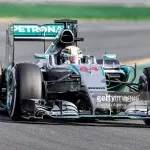
RaceThe pinnacle of high-speed auto sport, Formula One or F1, is estimated to be worth $4 billion per year. The commercial rights to the sport alone generate annual revenues of $1 billion. Nearly 600 million sport enthusiasts from 128 countries tune in regularly to follow F1 circuit championships.

The season includes a series of races, known as Grands Prix, organized around the world on F1 circuits and public roads. The results of each race are evaluated using a points system to determine two annual World Championships—one for drivers and one for constructors.

F1 Yoga: Body, Mind, and Soul

Modern Formula One cars are mid-engine open cockpit, open wheel single-seaters primarily made of carbon-fiber composites. The entire car weighs only 1,523 pounds, the minimum weight set by regulations. F1 cars can race up to speeds of 220 mph with the rev limiter reaching an astronomical range of 15,000 RPM while being capable of lateral acceleration in excess of 5g when turning. In sharp contrast, a high-performance 2-seater mid-engine street car like the Porsche Cayman, which is considered ultra-light and weighs around 3,600 lbs., can only reach 7,500 rpm while achieving 1g of lateral acceleration.

Since 1981, F1 teams have been required to build their car chassis, which is distinct from most other races like the IndyCar Series which allows teams to purchase their chassis. When the Formula One series began in 1950, eighteen teams competed for the coveted title. Ferrari remains the only team competing today since the formation of F1 series in 1950.

Cost to Play

Inductees are required to cough-up a princely sum of £25 million. Because of the  stiff barrier to entry, potential entrants/constructors prefer to buy existing teams (e.g., B.A.R. purchase of Tyrrell and Midland purchase of Jordan). In 2006, the total spending of all eleven competing teams was $2,900 million (Toyota $418.5, Ferrari $407, McLaren $402, Honda $381, BMW-Sauber $355, Renault $324, Red Bull $252, Williams $196, Midland F1/Spyker-MF1 $120, Toro Rosso $75, and Super Aguri $57 million).

The cost of designing and building mid-tier cars can reach $120 million. F1 teams pay entry fees of $500,000 plus added amounts based on prior performance. F1 drivers pay a Super-license fee of $10,000 plus added amounts based on prior performance. Therefore, you must pay-to-play.

F1 drivers earn the highest salary of any class of drivers. The highest paid driver in 2010 was Fernando Alonso, who received $40 million from Ferrari. The top Formula One drivers get paid more than IndyCar or NASCAR drivers who earn around a tenth of F1 pay. Teams get substantial amount of money for winning F1 series races, or even finishing in the top 10 list, which can hover around the $100 million mark. the bottom line is that it pays to play.

The Maestro

In 1978, Bernie Ecclestone became the President of Formula One Constructors’ Association (FOCA). He has been credited with rearranging and managing F1’s commercial rights and catapulting the speeding autobahn into a multibillion-dollar business. Ecclestone trick was to persuade the teams to bargain as a collective group rather than contract individually (we are well aware of the economic benefits of collective bargaining!). The new contracting arrangement meant that FOCA, or the constructors, effectively acquired the responsibility of negotiating and distributing television revenue.

Grands Prix

The inaugural 1950 world championship season included seven races. The number for the 2014 season was nineteen. Not surprisingly, much of the races are held in Europe. Traditionally, the country hosting a Grand Prix carries the name of the country. The United States has held six separate Grands Prix, including the Indianapolis 500, with the additional events named after the host city.

Recent additions to the calendar include the Singapore Grand Prix (2008), Abu Dhabi Grand Prix (2009), Korean Grand Prix (2010), Indian Grand Prix (2011), United States Grand Prix (2012),a and Russian Grand Prix (2014).

Winners

In 2014, Mercedes emerged as the dominant force with Lewis Hamilton winning the championship closely followed by his main rival and team-mate, Nico Rosberg. Mercedes won 16 out of the 19 races in 2014 (the other 3 victories went to Daniel Ricciardo of Red Bull). In 2015, only Ferrari posed a negligible challenge for Mercedes. Ferrari’s driver, Vettel, won the three Grands Prix that Mercedes did not win.

Are you ready to play?

March 18, 2016; 9.48P

http://www.hindustantimes.com/other-sports/boring-predictable-f1-gets-shakeup-with-more-races-rule-changes/story-1ZwcSwB3vTE1XCeaWQac2N.html

google_plusmailby feather

Mr. Minister and Malaysian Malaise

MalaysiaThe Swiss Attorney General’s office declared that approximately $4 billion has been misappropriated from state-owned companies in Malaysia much of which originated from the Malaysian State Fund, named 1MDB. Using a network of intricate financial transactions, more than $1 billion was transferred from 1MDB into the Malaysian Prime Minister’s personal bank account between 2011 to 2013.  

The Malaysian Attorney General who was investigating the illegal use of public funds concluded that the money transfer into the Malaysian Prime Minister’s private bank account was a legal donation from Saudi Arabia’s royal family. The Saudi government officials, however, have publicly denied making any such donation. In the meantime, the Malaysian Prime Minister continues to serve as the chairman of the board of advisors to 1MDB.

Why Swiss Authorities

Swiss Attorney General’s Office have found evidence of unlawful money transfers linked to 1MDB relying on the Swiss banking system. Swiss officials became interested in suspicious financial activities around 1MDB because of concerns that their banking system is being used to bribe public officials, launder money, and other criminal activities.

The investigators allege that funds were transferred into private accounts using a web of complex financial transactions with the help of two senior former officials of a state-owned Abu Dhabi company called Aabar Investments PJS. Abu Dhabi is the largest of the United Arab Emirate’s (UAE) seven member emirates. It is also the capital of UAE.

Malaysian State Fund

Malaysia Development Berhad (1MDB) is a strategic development company, which is wholly owned by the Government of Malaysia, established to fund strategic long-term economic development projects through global partnerships and foreign direct investment. 1MDB Fund began as a sovereign wealth fund under the name “TIA” to propel economic development of one of the states of Federal Malaysia. In 2009, the Malaysian Prime Minister broadened TIA into a federal entity and renamed the wealth fund as 1MDB. 

What Transpired

  • In 2009, Aabar Investments PJS, a state-owned Abu Dhabi company, pledged to help 1MDB acquire power plants and build a finance center in Kuala Lumpur. Aabar Investments PJS is a fully owned subsidiary of International Petroleum Investment (IPIC), an Abu Dhabi sovereign-wealth fund. IPIC guaranteed billions of dollars of 1MDB bonds.
  • In 2012, to facilitate illegal wire transfer, about $1.4 billion was paid to Aabar Investments PJS Ltd, which was a company registered in British Virgin Islands with a name similar to Aabar Investments PJS but additionally had the word “Ltd.” This company was created by senior former officials of Aabar Investments and IPIC.  
  • The money was then moved from Aabar Investments PJS Ltd to Tanore Finance Corp., which was also registered in British Virgin Islands.
  • Among other bank accounts, Tanore Finance Corp. holds bank accounts in Singapore and an account in a Swiss private bank named “Falcon Bank,” which is owned by Abu Dhabi sovereign-wealth fund. Falcon Bank had business dealings with 1MDB. 
  • Via these various interconnected accounts, Tanore Finance Corp was able to  transfer funds from its bank account in British Virgin Islands, to a bank account in Singapore, to another account in a Swiss private bank where names are concealed, and then eventually to the Malaysian Prime Minister’s personal bank account.

Corruption and Economic Development

Corruption involves the abuse of entrusted power for private gain. Because of the concentration of entrusted power in politics, the most outrageous cases of corruption involve high level politicians. According to a “Corruptions Perception Index” constructed by Transparency International, where 1 is the least corrupt country, Malaysia is ranked 54th in corruption and UAE is ranked 74th.  

Emerging markets and less developed countries must rely on reputation to attract much needed private and public funds to spur economic development. Therefore, the costs to society from corruption in these countries are disproportionately higher than wealthier countries. Yet, much too often, the most egregious cases of corruption are confined to poorer countries. Because of the massive benefits of corruption, there are few incentives to institute legal and enforcement structures to confront corruption in poorer nations, which in turn hinders economic development.

The vicious circle of corruption!

March 5, 2016; 1.48P

http://news.yahoo.com/more-1-billion-transferred-malaysia-pms-accounts-wsj-035217879–sector.html

http://www.wsj.com/articles/swiss-attorney-general-expresses-concern-over-halt-of-malaysian-1mdb-probe-1454083061

http://www.wsj.com/articles/deposits-in-malaysian-leaders-accounts-said-to-top-1-billion-1456790588

google_plusmailby feather

Abusing the Accounting Matching Principle

matchingCompanies have incentives to recognize revenues but not the costs associated with generating those revenues because doing so allows them to report inflated income for the current period. Under US GAAP, companies are required to “match” revenues with costs in the same period so that current earnings are an accurate predictor of economic income. Monsanto, a large multinational agricultural public company, did exactly what it was not supposed to do. It violated the most fundamental accounting rule—the matching principle. The company was eager to recognize revenues but not the costs associated with generating revenues.

The Securities and Exchange Commission (SEC), the Robocop patrolling Wall Street and the guardian angel of the average investor, charged Monsanto of misstating earnings because the company failed to properly account for the costs of sales associated with its flagship herbicide product “Roundup.” Monsanto agreed to pay $80 million in penalties. It is one of the largest accounting-related settlements by the SEC since Mary Jo White took over as the Chair of the Commission in 2013.

Accounting Abuse

One of Monsanto’s flagship and highly profitable products is a weed-killer herbicide named Roundup. Because of intense competition from generic products, and possibly facing the prospect of a sharp decline in profits, Monsanto introduced an aggressive rebate program from 2009. Under the program, the company would offer steep price reductions on the product, or pay a rebate on the product in subsequent years, if retailers and distributors met certain sales goals. In 2010 alone, Monsanto paid $44.5 million to its two largest distributors as a rebate for meeting the sales goals of Roundup for its past rebate programs.

The accounting problem was that Monsanto was recognizing revenues from the sale of Roundup but it failed to include an estimate of the cost of the rebate that would be paid to its retailers/distributors in future periods. Because the rebate contributed to the sale of Roundup for the current period, the company is required to include rebate estimates in the current period. The company possibly deferred recognizing the rebate costs to future periods when cash was being paid which violated the matching principle and the fundamental “accrual” notion of accounting.

Penalties

In addition to the company fine of $80 million, three Monsanto accounting and sales executives agreed to pay penalties to settle individual charges against them. The SEC found that two certified public accountants (CPAs) at Monsanto either knew or should have known that Monsanto was improperly documenting costs tied to the program and were suspended from practicing as accountants of public companies.

Monsanto neither admitting nor denied any wrongdoing but agreed to hire a consultant to review its financial reporting of the rebate programs. Based on the review, the company disclosed that it was going to restate its earnings from 2009 to 2011.

Monsanto’s CEO, Hugh Grant, reimbursed the company $3,165,852 for cash bonuses and stock awards received during the period. It is not surprising or unusual for CEOs to pay back their incentive compensation if the company has accounting related misreporting. Under the “clawback” provision of the Sarbanes-Oxley Act of 2002, executives are required to pay back compensation during periods when accounting misstatements occurred, even if the executive was not directly engaged in the misconduct.

Ms. White said “Corporations must be truthful in their earnings releases to investors and have sufficient internal accounting controls in place to prevent misleading statements…. Failing to recognize expenses related to rebates is the latest page from a well-worn playbook of accounting misstatements,” she said.

Costs of Accounting Manipulations

The stock price of Monsanto has gone down from a high of $120 to a current price of around $90 which is a 25% decline. With total shares outstanding at 536 million, the magnitude of the total loss to shareholders is a staggering $16 billion in just one year. As always, ultimately, investors and shareholders lose from accounting abuses.

February 27, 2016; 3.55P

http://www.nytimes.com/2016/02/10/business/dealbook/monsanto-to-pay-80-million-to-settle-charges-of-improper-accounting.html?_r=0

google_plusmailby feather

Death, Taxes, and Goddess Helvetia

swiss-bankingnewSwitzerland is the world’s largest offshore financial center with more than $2.2 trillion of offshore assets. Earlier this year, the U.S. Justice Department declared that it expects to collect more than $1.36 billion from 80 Swiss banks as part of a broad legal settlement. Numerous Swiss banks admitted to planning illegal tax strategies to enable U.S. taxpayers conceal income from U.S. tax authorities through an intricate web of offshore accounts.

In 2009, UBS paid $780 million to the U.S. government and turned over more than 4,000 names to avoid criminal charges. In 2014, Credit Suisse pleaded guilty to one charge of encouraging tax evasion and paid $2.6 billion as part of a settlement to the Justice Department.

Collectively, in the last 6 years, the U.S. has collected more than $13 billion from individuals and financial firms in connection with secret offshore accounts whose singular objective is to evade paying taxes.

Why Swiss Banks?

Swiss banks typically offer two prominent rewards for depositors ― privacy and the low risk. Because Swiss laws forbid their bankers from disclosing the existence and identity of individual accounts without the consent of the account holder, depositors are able to hide their financial assets under a cloak of secrecy. Additionally, because the Swiss franc has virtually zero inflation with the backing gold reserves (at least 40%), depositors’ exposure to foreign currency risk is negligible. The political neutrality retained by the Swiss government in world affairs ensures very little political risk as well. Given these distinct benefits, Swiss banks have become a notorious haven for parking (un)accountable money.

Private vs. Retail Banking

Switzerland offers a wide array of private and retail banking services. Private banking refers to services provided by banks to private individuals with unusually large assets. Historically, exclusive private banking service has been reserved for those with liquid assets over $1 million. The services in a private bank include private counseling in wealth management, investments, tax concerns, and estate planning. Many private banks require a special invitation or referral by current customers.

Retail banking, on the other hand, is your traditional mass-market banking system offering checking, savings, personal loans, mortgages and other types of accounts for individuals. While many retail banks also offer investment services, they are not at the level of those offered by private banks.

EU and Swiss Banking Agreement

The European Union (EU) and Switzerland have agreed to exchange information on the bank accounts with the intention of preventing EU citizens from hiding undeclared income in Swiss banks from 2018. The pact means that EU countries will automatically receive the names, addresses, tax identification numbers and dates of birth of their residents with accounts in Swiss banks thereby making it almost impossible for EU citizens to hide wealth from EU-based tax jurisdictions.

The European Commission is negotiating similar agreements with Andorra, Liechtenstein and Monaco, which are three European microstates with very low levels of taxation and a popular destination for depositors intending to hide their financial assets from tax authorities.  

Tax-Free Rest of the World

Unfortunately, there are no such agreements between Switzerland and the rest of the world. Therefore, for the time being, citizens of non-EU and non-US jurisdictions are relatively free to evade taxes by tapping into the sophisticated Swiss banking system.

The irony is that countries with the maximum need for resources to fund investments in infra-structure, education and healthcare are unable to rely on tax-based revenues to fund their growth because of the private banking system. Largely because of corruption, governments of developing countries and emerging markets have very little economic incentives to enact measures, or to create bilateral agreements, to limit tax evasion.  

Benjamin Franklin once famously said “In this world nothing can be said to be certain, except death and taxes.” For much of the world population, while death is a forgone conclusion, paying taxes is not; thanks to Goddess Helvetia.

The link below identifies ways financial transactions were structured to evade the origin of funds and avoid taxes.

http://www.wsj.com/articles/inside-swiss-banks-tax-cheating-machinery-1445506381

February 20, 2016; 7.58P

google_plusmailby feather

Cost of Corporate Crime

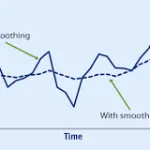
indexBrixmor Property Group Inc., the country’s largest owner of grocery-anchored shopping malls, disclosed that its key personnel were directly involved in “smoothing income” items between reporting periods in quarters dating back to 2013. The changes amounted to $500,000 for 2014 and $300,000 for 2015. A spokesperson for the company said Reuters “We have zero tolerance for unethical behavior at the companies we invest in. While the dollar amounts involved were small, the principle is not. Fortunately, the business remains solid,”

Following the announcement of accounting fraud, Brixmor disclosed that its CEO, President and Chief Financial Officer, Chief Accounting Officer, and an accounting employee had resigned.  These related announcements sent the stock price of the company plummeting by more than 25%.

Company Background

Brixmor Property Group Inc., (NYSE: BRX), is a real estate investment trust that is headquartered in New York City. The company owns and operates the largest wholly owned portfolio of grocery-anchored community and neighborhood shopping centers in the U.S., with more than 520 commercial real estate properties located across 38 states. The company’s shopping centers feature grocers, retailers and local retail brands. Brixmor was taken public in 2013 by Blackstone Group, which remains its largest shareholder.

As of 2014, Moody’s assigned Brixmor a Baa3 credit rating, which the company intends to use to acquire new sources of capital in unsecured credit market.

Why “Smooth” Income

My own research (see Ghosh, Gu and Jain, Review of Accounting Studies 2005), and those of others (see, Barth, Elliott and Finn, Journal of Accounting Research 1999), show that investors reward companies handsomely for reporting sustained increases in earnings over consecutive quarters. When companies are able to meet or beat prior period benchmarks, which include prior period earnings or analyst expectations, investors consider earnings to be of high quality, i.e., earnings are expected to persist into the future. High quality of earnings also indicates lower risk because earnings are perceived as being less volatile. Both arguments suggest a surge in stock price.

 Think of General Electric (GE) under Jack Welsh. As of fiscal year 2000, GE had reported 100 consecutive quarters of increased earnings from continuing operations. During the 90s decade (1990 to 2000), GE stock price had increased from around $5 to $60 (on an adjusted basis), which is a staggering 1,200% growth (or a 25% growth in stock price per annum). 

 Why the Decline in Stock Price

 One explanation could be that the company might have to restate its prior period financial statement from the accounting fraud. However, this is not the case. The company reported that it does not expect to restate its financial results because impact of the accounting manipulation was immaterial to its performance. Further, the company believes that it will not impact the Company’s compliance with the financial covenants in its debt agreements.

A more realistic explanation is that the company will now become the target of several class-action lawsuits for violating federal securities laws by issuing misleading information to investors. For example, Hagens Berman Sobol Shapiro LLP, a national investor-rights law firm, is investigating whether to file a class action lawsuit based on the current information. Similarly, Scott and Scott, Attorneys at Law, LLP, a global investor rights law firm, is also investigating Brixmor for possible securities fraud.

Past studies show that the amount of settlements from class action lawsuits are economically large – a cost which is ultimately borne by investors!  

February 10, 2016; 5.58A

http://www.reuters.com/article/us-brixmor-accounting-idUSKCN0VH13P

google_plusmailby feather

The Most Powerful Woman to Ride on “The Street”

DETROIT, MI - MAY 16: General Motors CEO Mary Barra sits in the first Camaro ever built at a Camaro Museum on Detroit's Belle Isle before GM officially reveals the new 2016 Chevrolet Camaro May 16, 2015 in Detroit, Michigan. General Motors is hosting a day-long event to unveil the sixth-generation Camaro. (Photo by Bill Pugliano/Getty Images)

DETROIT, MI, 2015

When Mary Barra was appointed the CEO of General Motors on Jan 15, 2014, she became the first woman-CEO in a U.S. auto manufacturing company. According to Catalyst, women hold just under 17% of the seats on boards of directors and fewer than 15% of senior executive positions in Fortune 500 companies. Only 23 women head the 500 largest corporations in the U.S.

Crash Check

By the end of 2013, GM was losing money in Europe and the big bet on Chevrolet Volt electric car was yet to pay off. Ms. Barra survived a harrowing first year facing revelations about faulty ignition switches which allegedly resulted in 74 deaths and 126 injuries, a 30-million car recall and pressure from investors to return more cash to shareholders. She was forced to testify at a hearing by a House panel into the delayed response by GM in recalling 1.6 million small GM cars.

Deft Driving  

Since then. Ms. Barra has been widely praised for her handling of the crisis. The company recently had its best quarter since emerging from bankruptcy in 2009. She was praised for tackling the faulty ignition switches head on. She issued a corporate mea culpa and set up a victims’ compensation fund. GM also agreed to pay $900 million to settle criminal charges levied by the Justice Department.

Under her leadership, GM has increased its sales dramatically and has delivered its strongest earnings since 2009. Ms. Barra considers India, China, and the U.S. luxury car business as the prime potential growth markets. In recent years, GM has benefited from a sharp increase in U.S. demand for trucks and sport-utility vehicles, which is helping fund future projects. She took major decision to discontinue manufacturing operations in Southeast Asia, close a factory in Australia, and end GM’s sales and manufacturing operations in Russia.

Stock Survey

GM’s stock price, however, has declined during her tenure from around $40 to $29, which is below the company’s $33 initial public offering (IPO) price in 2010. Ms. Barra said the company needs to deliver on what it promises if it hopes to get Wall Street to give it more credit.

While market valuation of a stock may be an appropriate, and parsimonious, yardstick to evaluate the performance of a CEO in many circumstances, the unusual circumstances at GM would require a more nuanced lens to judge the CEOs handling of the crisis, tackling challenges from lack of growth in the emerging economies where GM has a strong presence, and confronting investor-fascination with electric car manufacturers like Tesla.

Most Powerful Woman on Wall Street

The encouraging news is that the financial pundits are giving Ms. Barra a resounding endorsement for her efforts and initiatives. Forbes ranks her as the most powerful woman on Wall Street in 2015 and the 5th most powerful woman in the World. No Bar is High Enough for Barra.

Are you ready to test drive GM’s redesigned Corvette Stingray!

Jan 27, 2016; 10.57P

http://www.thedetroitbureau.com/2015/09/gms-barra-named-most-powerful-woman-in-business/

http://www.wsj.com/articles/gms-barra-says-focus-is-unwavering-1443138775

google_plusmailby feather

There Will Be Blood: Banking on Oil

There will be bloodOil prices fell to record levels this week trading at prices below $27 a barrel for the first time since 2003. Compared to 2012 prices, the decay in the price of oil is staggering. On the demand side, investors are concerned that global demand for oil is expected to be lower than expected because of the sluggish pace of global growth and also from lower than expected growth in China and other emerging markets. On the supply side, as the leading oil-producing countries including Saudi Arabia, Gulf countries, Russia, and the U.S. jostle to maintain their respective market shares, global oil supply is bound to exceed demand thereby creating a downwards pressure on oil prices. The latest player to flood the market with oil is Iran because of the lifting of sanctions. According to some estimates, Iran is expected to produce 300,000 barrels of oil by the first quarter of 2016.

Future of Oil Prices

In the long run, oil prices are bound to surge. The demand for oil is expected to increase as the global economy, lead by the BRICS countries and emerging markets, recovers from the slump. On the supply side, with prices at record low levels, it is a matter of time before low-cost producers will exit the market which will contract the production of oil.

Should we expect a dramatic recovery in oil prices in 2016? Hard to tell. A few die-hard optimistic experts are projecting prices around $60 per barrel by the end of the year. Others, who are more cautionary in their approach, expect that the equilibrating market forces will be in play for a few years before we arrive at the “new normal price.”

If you are long on oil, you might have to wait for a while to recover your losses or to make money if you are buying at record low levels.

Immediate Economic Effects

Declining oil price is a vital reason for the collapse in the equity market in the U.S. this month. The stock market has lost more than 10% of its value so far in January and the worst may not be over yet. Energy sector has been hit the hardest. Companies have laid off thousands of workers and cut billions of dollars in investments because of the sustained drop in oil prices. Royal Dutch Shell PLC announced last week that its fourth-quarter profit fell as much as 50%, and it plans to cut $3 billion in costs this year. Many debt-laden companies closely affiliated with oil are expected to go bankrupt because their operations are unable to generate sufficient cash flow to pay creditors.  

Some savvy portfolio managers and investment strategists are concluding that oil price must stabilize before investors can expect a reduction in the broader equity market volatility.

Banks Stuck with Bad Loans

Coinciding with the decline in oil prices and the slump in equity markets, both national and regional banks have been taking big hits. A rational economic question is why are bank stocks being harmfully affected?

The response is bad loans. Many oil-related companies, especially oil and gas drillers, borrowed heavily from national and regional banks when oil prices were high a few years. Banks were also willing to lend on generous terms because of rising oil prices. Now banks are stuck with ‘bad loans’ on their books which means that, according to U.S. GAAP, banks and other financial institutions must record a charge against current earnings for possible future bad loans. Citigroup Inc. disclosed that it is reserving $500 million in loan-loss provisions (a reserve against future bad loan write-offs), which affects current earnings negatively and therefore creates a drag on the bank’s stock price. Similarly, Regional Financial Corp, a small regional lender from Alabama, disclosed that its loan-loss provisions or charge-offs increased from $18 million last quarter to $78 this quarter because of bad loans to energy borrowers.      

Long-term Political Effects

If oil prices remain at these historic low levels, we should expect political turmoil in the middle east (e.g., Saudi Arabia and other Gulf countries) and Russia where governments have traditionally used cash flows generated from high oil prices to heavily subsidize their citizens, buy loyalty and attain political legitimacy. Now with sustained low oil prices, many of these countries are forced to cut fuel subsidies and other form of subsidies. The reduction of subsidies has large repercussions for political stability in these countries.

The ‘deep drilling’ issue is that low oil price is expected to have negative economic and political connotations.  

google_plusmailby feather

REITs and Field of Dreams: Home-run or Strike

Real EstateDepends!

Investing in real estate has become increasingly popular over the last fifty years. Considering the general rise in property prices over the last few decades in the U.S., and around the world, it is not surprising that investors are chasing returns generated from investing in real estate through REITs.

What are REITs?

A real estate investment trust (REIT) is one form of an investing vehicle intended to make money from investments in real estate. REITs are created when a trust (or corporation) uses funds from investors to purchase and operate income properties. REITs develop and manage real-estate and commercial properties including hotels, public storage units, office buildings, factory outlets, shopping centers, and apartment complexes. REITs are bought and sold on the major exchanges similar to publicly traded corporations.

Why invest in REITs?

There are several reasons why investors prefer to invest in REITs (or REIT funds). First, REITs must pay out 90% of its taxable profits in the form of dividends to retain its status as a REIT. The advantage is that, by doing so, REITs avoid paying corporate income tax. In contrast, regular public companies are taxed twice, once when it earns a profit and then again when it decides to distribute its after-tax profits as dividend. Thus, if you invest in REITs, you avoid the so called “double taxation” of income. Second, because of the 90% distribution requirement, dividend yields are high for REITs which is a key reason why investors seeking income invest in REITs. Third, real estate, as an asset class, often shows low correlation with other types of stock or bond investments. Therefore, real estate is needs to be added to a portfolio for diversification reasons.

REITs and Long-term performance

Take for example Vanguard REIT Index Fund which has one of the lowest, if not the lowest, expense ratios of the different types of funds investing in REITs. The Vanguard REIT Index Fund has assets totaling almost $53 billion invested in 155 different holdings. The fund has generated a return of 11.65% over the past five years and 7.44% over the past decade.

REITs and Short-term performance

2014: You would have made staggering returns, on an absolute and relative basis, if you invested in a REIT in 2014. The Fund generated a total return of 30.13%. In contrast, the return on S&P 500 stocks was only 13.69%. Therefore, you earned more than twice than the market when investing in real estate in 2014.

2015: You would have made dismal returns if you invested in a REIT. Vanguard REIT Index Fund generated a total return of 2.31%. However, if you held REITs for two years (2014-2015), you would have beaten the market (the average return would have been around 15%-16%).

REITs and the Future

The real estate sector is highly sensitive to interest rates. Future REIT fund returns might be adversely affected as the underlying businesses grapple with higher interest payments. If you expect interest rates to rise this year, REITs may not be your top performer but one that will still give you high dividend if you seek extra cash flow. 

Are you still betting on the real estate this year?

http://money.usnews.com/funds/mutual-funds/real-estate/vanguard-reit-index-fund/vgsix

google_plusmailby feather

Economic Predictions for 2016: To Be or Not to Be

Markets


Some economic predictions for the upcoming year from the leading financial experts on matters related to the risk factors posed by China, US treasury yields, US equity market returns, global energy prices, and the some of the more promising countries from LatAm.


• Recession in China

Ruchir Sharma, head of emerging markets, Morgan Stanley Investment Management, concludes that we are one big shock away from a global downturn. He considers China as the country posing the highest level of risk because of its reliance on debt, excessive investment, and a declining population that undermines growth. He considers low-debt countries from Eastern Europe and South Asia as being in a better position to tackle or weather any negative shock.

Yang Zhao, chief China economist at Nomura Holdings, disagrees. Although Yang reduced China’s 2016 GDP forecast to 5.8 percent from 6.7 percent, he does not expect a hard landing in China because he expects the Chinese economy to create jobs, especially in the labor-intensive services sector. He does not expect a financial crisis in China because most of the country’s institutions are backed by the government.

• Fixed Income Rates

Dan Fuss, vice chairman at Loomis Sayles & Co. and co–portfolio manager of the $20 billion Loomis Sayles Bond Fund expects yields on the benchmark 10-year Treasury note to hover around 2.6 to 2.8 percent by the end of 2016.
Jim Caron, a managing director at Morgan Stanley Investment Management, believes that, because of expected inflation risk, 30-year Treasury yields might hover around 3.75 percent.

• Surge in the Equities

Thomas J. Lee, managing partner at Fundstrat Global Advisors, expects equities to outperform in 2016. Lee expects outperformance by banks and blue-chip businesses. Banks are expected to benefit from the Fed tightening while blue chips are expected to do well as the economy picks up.

• Play on Energy

Barbara Byrne, vice chairman of investment banking at Barclays Capital, expects a recovery in the prices of natural resources for largely political reasons. She expects oil prices to stabilize at about $60 per barrel.

• Latin America

Tulio Vera, chief global investment strategist for the J.P. Morgan Latin American Private Bank, is very optimistic about Argentina. He also believes that Mexico will benefit from the U.S. economic recovery, especially in the auto industry.

November 23, 2015; 7P

http://www.bloomberg.com/news/articles/2015-11-20/14-predictions-for-2016-from-the-brightest-minds-in-finance

google_plusmailby feather
Older posts Newer posts

© 2016 Aloke Ghosh

Theme by Anders NorénUp ↑