CategoryMutual-Hedge Funds

Cost of Corporate Crime

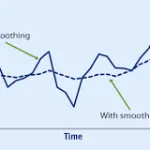
indexBrixmor Property Group Inc., the country’s largest owner of grocery-anchored shopping malls, disclosed that its key personnel were directly involved in “smoothing income” items between reporting periods in quarters dating back to 2013. The changes amounted to $500,000 for 2014 and $300,000 for 2015. A spokesperson for the company said Reuters “We have zero tolerance for unethical behavior at the companies we invest in. While the dollar amounts involved were small, the principle is not. Fortunately, the business remains solid,”

Following the announcement of accounting fraud, Brixmor disclosed that its CEO, President and Chief Financial Officer, Chief Accounting Officer, and an accounting employee had resigned.  These related announcements sent the stock price of the company plummeting by more than 25%.

Company Background

Brixmor Property Group Inc., (NYSE: BRX), is a real estate investment trust that is headquartered in New York City. The company owns and operates the largest wholly owned portfolio of grocery-anchored community and neighborhood shopping centers in the U.S., with more than 520 commercial real estate properties located across 38 states. The company’s shopping centers feature grocers, retailers and local retail brands. Brixmor was taken public in 2013 by Blackstone Group, which remains its largest shareholder.

As of 2014, Moody’s assigned Brixmor a Baa3 credit rating, which the company intends to use to acquire new sources of capital in unsecured credit market.

Why “Smooth” Income

My own research (see Ghosh, Gu and Jain, Review of Accounting Studies 2005), and those of others (see, Barth, Elliott and Finn, Journal of Accounting Research 1999), show that investors reward companies handsomely for reporting sustained increases in earnings over consecutive quarters. When companies are able to meet or beat prior period benchmarks, which include prior period earnings or analyst expectations, investors consider earnings to be of high quality, i.e., earnings are expected to persist into the future. High quality of earnings also indicates lower risk because earnings are perceived as being less volatile. Both arguments suggest a surge in stock price.

 Think of General Electric (GE) under Jack Welsh. As of fiscal year 2000, GE had reported 100 consecutive quarters of increased earnings from continuing operations. During the 90s decade (1990 to 2000), GE stock price had increased from around $5 to $60 (on an adjusted basis), which is a staggering 1,200% growth (or a 25% growth in stock price per annum). 

 Why the Decline in Stock Price

 One explanation could be that the company might have to restate its prior period financial statement from the accounting fraud. However, this is not the case. The company reported that it does not expect to restate its financial results because impact of the accounting manipulation was immaterial to its performance. Further, the company believes that it will not impact the Company’s compliance with the financial covenants in its debt agreements.

A more realistic explanation is that the company will now become the target of several class-action lawsuits for violating federal securities laws by issuing misleading information to investors. For example, Hagens Berman Sobol Shapiro LLP, a national investor-rights law firm, is investigating whether to file a class action lawsuit based on the current information. Similarly, Scott and Scott, Attorneys at Law, LLP, a global investor rights law firm, is also investigating Brixmor for possible securities fraud.

Past studies show that the amount of settlements from class action lawsuits are economically large – a cost which is ultimately borne by investors!  

February 10, 2016; 5.58A

http://www.reuters.com/article/us-brixmor-accounting-idUSKCN0VH13P

mailby feather

The Most Powerful Woman to Ride on “The Street”

DETROIT, MI - MAY 16: General Motors CEO Mary Barra sits in the first Camaro ever built at a Camaro Museum on Detroit's Belle Isle before GM officially reveals the new 2016 Chevrolet Camaro May 16, 2015 in Detroit, Michigan. General Motors is hosting a day-long event to unveil the sixth-generation Camaro. (Photo by Bill Pugliano/Getty Images)

DETROIT, MI, 2015

When Mary Barra was appointed the CEO of General Motors on Jan 15, 2014, she became the first woman-CEO in a U.S. auto manufacturing company. According to Catalyst, women hold just under 17% of the seats on boards of directors and fewer than 15% of senior executive positions in Fortune 500 companies. Only 23 women head the 500 largest corporations in the U.S.

Crash Check

By the end of 2013, GM was losing money in Europe and the big bet on Chevrolet Volt electric car was yet to pay off. Ms. Barra survived a harrowing first year facing revelations about faulty ignition switches which allegedly resulted in 74 deaths and 126 injuries, a 30-million car recall and pressure from investors to return more cash to shareholders. She was forced to testify at a hearing by a House panel into the delayed response by GM in recalling 1.6 million small GM cars.

Deft Driving  

Since then. Ms. Barra has been widely praised for her handling of the crisis. The company recently had its best quarter since emerging from bankruptcy in 2009. She was praised for tackling the faulty ignition switches head on. She issued a corporate mea culpa and set up a victims’ compensation fund. GM also agreed to pay $900 million to settle criminal charges levied by the Justice Department.

Under her leadership, GM has increased its sales dramatically and has delivered its strongest earnings since 2009. Ms. Barra considers India, China, and the U.S. luxury car business as the prime potential growth markets. In recent years, GM has benefited from a sharp increase in U.S. demand for trucks and sport-utility vehicles, which is helping fund future projects. She took major decision to discontinue manufacturing operations in Southeast Asia, close a factory in Australia, and end GM’s sales and manufacturing operations in Russia.

Stock Survey

GM’s stock price, however, has declined during her tenure from around $40 to $29, which is below the company’s $33 initial public offering (IPO) price in 2010. Ms. Barra said the company needs to deliver on what it promises if it hopes to get Wall Street to give it more credit.

While market valuation of a stock may be an appropriate, and parsimonious, yardstick to evaluate the performance of a CEO in many circumstances, the unusual circumstances at GM would require a more nuanced lens to judge the CEOs handling of the crisis, tackling challenges from lack of growth in the emerging economies where GM has a strong presence, and confronting investor-fascination with electric car manufacturers like Tesla.

Most Powerful Woman on Wall Street

The encouraging news is that the financial pundits are giving Ms. Barra a resounding endorsement for her efforts and initiatives. Forbes ranks her as the most powerful woman on Wall Street in 2015 and the 5th most powerful woman in the World. No Bar is High Enough for Barra.

Are you ready to test drive GM’s redesigned Corvette Stingray!

Jan 27, 2016; 10.57P

http://www.thedetroitbureau.com/2015/09/gms-barra-named-most-powerful-woman-in-business/

http://www.wsj.com/articles/gms-barra-says-focus-is-unwavering-1443138775

mailby feather

There Will Be Blood: Banking on Oil

There will be bloodOil prices fell to record levels this week trading at prices below $27 a barrel for the first time since 2003. Compared to 2012 prices, the decay in the price of oil is staggering. On the demand side, investors are concerned that global demand for oil is expected to be lower than expected because of the sluggish pace of global growth and also from lower than expected growth in China and other emerging markets. On the supply side, as the leading oil-producing countries including Saudi Arabia, Gulf countries, Russia, and the U.S. jostle to maintain their respective market shares, global oil supply is bound to exceed demand thereby creating a downwards pressure on oil prices. The latest player to flood the market with oil is Iran because of the lifting of sanctions. According to some estimates, Iran is expected to produce 300,000 barrels of oil by the first quarter of 2016.

Future of Oil Prices

In the long run, oil prices are bound to surge. The demand for oil is expected to increase as the global economy, lead by the BRICS countries and emerging markets, recovers from the slump. On the supply side, with prices at record low levels, it is a matter of time before low-cost producers will exit the market which will contract the production of oil.

Should we expect a dramatic recovery in oil prices in 2016? Hard to tell. A few die-hard optimistic experts are projecting prices around $60 per barrel by the end of the year. Others, who are more cautionary in their approach, expect that the equilibrating market forces will be in play for a few years before we arrive at the “new normal price.”

If you are long on oil, you might have to wait for a while to recover your losses or to make money if you are buying at record low levels.

Immediate Economic Effects

Declining oil price is a vital reason for the collapse in the equity market in the U.S. this month. The stock market has lost more than 10% of its value so far in January and the worst may not be over yet. Energy sector has been hit the hardest. Companies have laid off thousands of workers and cut billions of dollars in investments because of the sustained drop in oil prices. Royal Dutch Shell PLC announced last week that its fourth-quarter profit fell as much as 50%, and it plans to cut $3 billion in costs this year. Many debt-laden companies closely affiliated with oil are expected to go bankrupt because their operations are unable to generate sufficient cash flow to pay creditors.  

Some savvy portfolio managers and investment strategists are concluding that oil price must stabilize before investors can expect a reduction in the broader equity market volatility.

Banks Stuck with Bad Loans

Coinciding with the decline in oil prices and the slump in equity markets, both national and regional banks have been taking big hits. A rational economic question is why are bank stocks being harmfully affected?

The response is bad loans. Many oil-related companies, especially oil and gas drillers, borrowed heavily from national and regional banks when oil prices were high a few years. Banks were also willing to lend on generous terms because of rising oil prices. Now banks are stuck with ‘bad loans’ on their books which means that, according to U.S. GAAP, banks and other financial institutions must record a charge against current earnings for possible future bad loans. Citigroup Inc. disclosed that it is reserving $500 million in loan-loss provisions (a reserve against future bad loan write-offs), which affects current earnings negatively and therefore creates a drag on the bank’s stock price. Similarly, Regional Financial Corp, a small regional lender from Alabama, disclosed that its loan-loss provisions or charge-offs increased from $18 million last quarter to $78 this quarter because of bad loans to energy borrowers.      

Long-term Political Effects

If oil prices remain at these historic low levels, we should expect political turmoil in the middle east (e.g., Saudi Arabia and other Gulf countries) and Russia where governments have traditionally used cash flows generated from high oil prices to heavily subsidize their citizens, buy loyalty and attain political legitimacy. Now with sustained low oil prices, many of these countries are forced to cut fuel subsidies and other form of subsidies. The reduction of subsidies has large repercussions for political stability in these countries.

The ‘deep drilling’ issue is that low oil price is expected to have negative economic and political connotations.  

mailby feather

REITs and Field of Dreams: Home-run or Strike

Real EstateDepends!

Investing in real estate has become increasingly popular over the last fifty years. Considering the general rise in property prices over the last few decades in the U.S., and around the world, it is not surprising that investors are chasing returns generated from investing in real estate through REITs.

What are REITs?

A real estate investment trust (REIT) is one form of an investing vehicle intended to make money from investments in real estate. REITs are created when a trust (or corporation) uses funds from investors to purchase and operate income properties. REITs develop and manage real-estate and commercial properties including hotels, public storage units, office buildings, factory outlets, shopping centers, and apartment complexes. REITs are bought and sold on the major exchanges similar to publicly traded corporations.

Why invest in REITs?

There are several reasons why investors prefer to invest in REITs (or REIT funds). First, REITs must pay out 90% of its taxable profits in the form of dividends to retain its status as a REIT. The advantage is that, by doing so, REITs avoid paying corporate income tax. In contrast, regular public companies are taxed twice, once when it earns a profit and then again when it decides to distribute its after-tax profits as dividend. Thus, if you invest in REITs, you avoid the so called “double taxation” of income. Second, because of the 90% distribution requirement, dividend yields are high for REITs which is a key reason why investors seeking income invest in REITs. Third, real estate, as an asset class, often shows low correlation with other types of stock or bond investments. Therefore, real estate is needs to be added to a portfolio for diversification reasons.

REITs and Long-term performance

Take for example Vanguard REIT Index Fund which has one of the lowest, if not the lowest, expense ratios of the different types of funds investing in REITs. The Vanguard REIT Index Fund has assets totaling almost $53 billion invested in 155 different holdings. The fund has generated a return of 11.65% over the past five years and 7.44% over the past decade.

REITs and Short-term performance

2014: You would have made staggering returns, on an absolute and relative basis, if you invested in a REIT in 2014. The Fund generated a total return of 30.13%. In contrast, the return on S&P 500 stocks was only 13.69%. Therefore, you earned more than twice than the market when investing in real estate in 2014.

2015: You would have made dismal returns if you invested in a REIT. Vanguard REIT Index Fund generated a total return of 2.31%. However, if you held REITs for two years (2014-2015), you would have beaten the market (the average return would have been around 15%-16%).

REITs and the Future

The real estate sector is highly sensitive to interest rates. Future REIT fund returns might be adversely affected as the underlying businesses grapple with higher interest payments. If you expect interest rates to rise this year, REITs may not be your top performer but one that will still give you high dividend if you seek extra cash flow. 

Are you still betting on the real estate this year?

http://money.usnews.com/funds/mutual-funds/real-estate/vanguard-reit-index-fund/vgsix

mailby feather

Beware of Corporate Nip-Tuck

nip-tuckU.S. public companies must prepare their financial statements according to generally accepted accounting principles (GAAP) and much of the investor attention is concentrated on the Income Statement to asses a company’s operating performance. Any income or earnings to be GAAP compliant must be a separate line item reported on the Income Statement.

Over the last few decades, companies have been increasingly deviating from US GAAP earnings/income by underscoring some form of an adjusted income/earnings, also known as pro-forma earnings (e.g., EBITDA, or adjusted net income). What investors may not realize is that any pro-form number is not GAAP compliant and therefore the adjusted number may convey a biased assessment of the company, which may be the hidden purpose. 

Why?

The adjustments allow companies to exclude expenses such as asset write-downs, impairments, restructuring charges, losses from foreign-currency translations that management believes is not relevant to the company’s most fundamental operations. It should not come as a surprise that most adjusted measures tend to portray a much healthier image of corporate earnings. Companies are willing to go to any lengths or use any definition of earnings to avoid reporting losses.

According to Deutsche Bank research, about one in 10 major companies use the term adjusted EBITDA, up from one in 40 a decade ago. The difference between standard and adjusted earnings is also growing. Deutsche Bank expects the gap to widen to 40% in the fourth quarter of 2015, from 20% or 30% in recent periods. According to Wall Street Journal analysis, about a quarter of earnings disclosed in earnings announcements don’t comply with GAAP.

Example

United Technologies Corp. CEO Greg Hayes reported “…by adhering to accounting rules, we’re actually confusing people more than we were helping people understand what’s going on in the business. This is a simplification and really allows the investors to more easily understand what the businesses are doing.”

The implication is that we don’t need to adhere to accounting standards, we don’t need to worry about complying with the SEC reporting requirements, and we don’t need auditors or their attestation. Let us disregard the mechanisms in place to generate financial information that is representationally faithful, reliable and transparent; instead, let us trust the numbers generated by management according to what they believe is the best definition of earnings. A compelling story.

Regulatory concerns

 According to Mary Jo White, Chair of the Securities and Exchange Commission, “Non-GAAP measures are used extensively and in some instances may be a source of confusion.. This area deserves close attention.”

Regulators occasionally take companies to task for de-emphasizing US GAAP accounting numbers. The SEC has queried companies at least 100 times since 2006 about non-GAAP measures. For example, the SEC told T-Mobile US Inc.  to include figures that comply with accounting rules in its quarterly earnings release. The company had only used adjusted Ebitda, and omitted net income.

Bottom-line

Trust the company’s bottom line number, which is net income, and beware of pro-form or adjusted numbers generated by management!

http://www.wsj.com/articles/u-s-corporations-increasingly-adjust-to-mind-the-gaap-1450142921


mailby feather

Predatory Pricing and Oil Games

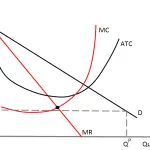
Graph_-_Predators_pricingPredatory pricing (undercutting) is a pricing strategy whereby producers lower their prices with the ultimate intention of driving out some competitors from the market. Because high cost producers are unable to sustain production at unusually low prices, they must exit the market which shrinks competition. Predatory pricing is illegal in most countries because it intends to choke competition which hurts consumers as they must pay higher prices. One might ask whether predatory pricing is illegal in the global market place. The answer will not surprise you.    

Saudi Arabia and Russia recently have engaged in a brand of “predatory pricing” by refusing to cut back on their production levels despite falling global demand. The net result of the overproduction is unusually low oil prices. The fundamental question is why are Saudi Arabia and Russia, historically the largest producers of oil, adopting such an aggressive production-strategy when they too suffer from lower oil prices? The answer not surprisingly is predatory pricing strategy. By not cutting-back on their production, the major oil producers are playing a long-term strategy of forcing high cost producers out of business. Their ultimate aim is to drive US oil producers out of business, at least the high cost producers. 

 Background

Oil production has been an oligopolistic market with a few large producers controlling the global market share. Saudi Arabia has traditionally controlled the largest market share with Russia being the second major producer. Largely because of the discovery of shale oil, the US has become a major oil producing country. In 2014, the US toppled Saudi Arabia and now has the distinction of being the largest producer of oil with a global market share of 13%.

Consequences

Oil prices have precipitously declined from around $80 per barrel to around $40 per barrel in less than a year because of the oil glut. Not surprisingly, the biggest casualty has been the U.S. energy industry. A great example of this struggle has been Chesapeake Energy Corp., an icon of the U.S. energy boom. In 2012, 54% of Chesapeake’s projects did not generate a single penny of profit. To compound its problems, hundreds of lawsuits and investigations challenged the company’s business practices.

Some activist investors including Carl Icahn forced out its charismatic co-founder/CEO Aubrey McClendon. Under the new CEO, Chesapeake has slashed spending by more than half compared with 2012, and pared its staff by 67%. Its drilling footprint is nearly 5.5 million acres smaller. Antitrust allegations against the company in Michigan have been resolved, as have about two-thirds of the lawsuits filed against Chesapeake over past business practices. Despite all these aggressive cost cutting measures, Chesapeake’s future remains precarious.

The company’s stock price has fallen from a high of around $30 in 2014 to about $5.41 last week, a nearly 85% decline. Chesapeake has written off $15.6 billion in holdings, and its cash flow continues to shrink. In the past several months, the company has suspended its dividend and laid off 740 employees. As the incumbent CEO Mr. Lawler said, “the biggest challenge is external. Chesapeake has been hampered by the low natural gas and oil prices.

Future

Presently, the major players are playing a “game of chicken” or a “hawk-dove game.” The principle of the game is that while each player prefers not to yield to the other, the worst possible outcome occurs when both players do not yield. As State-owned enterprises, Saudi Arabia and Russia are immune to market pressures or cost considerations, which is why they have continued to produce oil at past levels ignoring the negative information in prices. While US oil producers are much more sensitive to market pressures and cost considerations, many have refused to exit the business or cut-back on their production so long as current prices have covered their variable costs. US oil producers are expecting a rebound in oil prices in the near term.

What defines as the near term is hard to predict. While most economists agree that oil prices are unsustainable at $40 a barrel in the long run, we are left with the Keynesian question, what defines a “long-run.”

December 4, 2015; 1.14A

http://www.wsj.com/articles/chesapeakes-boss-faces-tall-order-1448558312?cb=logged0.04550649718616018

mailby feather

A ‘Valiant’ Proposition: The Socio-Economic Dilemma

ValeantUnlike traditional drug companies that tend of invest heavily in R&D to develop new drugs and live-saving medicine, Valeant Pharmaceuticals International Inc. is notorious for expanding via acquisitions and then increasing drug prices to fuel growth and reward its investors. For instance, the company bought the rights to a pair of life-saving heart drugs and their list prices rose by 525% and 212% the same day of the acquisition because the drugs lacked any competition from generic products. Not surprisingly, Valeant has been a top-performing stock with large institutional and hedge-fund ownerships. Stock prices rose by more than 1,000% over the last five years before reaching an all-time high of $262.52 in early August, 2015.

Last month, Valeant was in the ‘spotlight’ following a report by short-seller research firm Citron which alleged that Philidor, a specialty pharmacy, fabricating its sales data to inflate revenues especially those with Valeant, a large supplier of drugs for Philidor. Since the allegations, Valeant has discontinued its relationship with Philidor. Wall Street Journal and Bloomberg have also questioned the drug maker’s business. Goldman Sachs downgraded the stock citing concerns it will be awhile before the “dust settles” for Valeant.

Investors have dumped the stock following these starling allegations. Stock prices of Valeant declined from the all-time high of $262 to a low of $78 a few days ago, which is a loss of almost 70%. To compound the downward pressure on the company’s stock, Goldman Sachs called loans totaling $100 million it had made to the company’s CEO, which was backed by 2 million Valeant shares. When the CEO was unable to pay, last week Goldman sold 1.3 million of those shares to cancel the outstanding balance owed by the CEO.

The Socio-Economic Dilemma

The Valeant story presents a riveting socio-economic dilemma, the confluence of a ‘perfect storm,’ where economic imperatives collide with moral fortitude. While companies have the right to increase prices of their products, especially when there is no competition, to sustain investments in R&D, companies are also morally obligated not to engage in excessive price gouging behavior when the products are related to our mortality.

Because drugs can be considered as social goods, government intervention is inevitable when companies engage in price gouging. Regardless of the individual disposition on this matter, Valeant is a highly risky stock because the company is expected to be heavily scrutinized by the government. The Justice Department has already launched several investigations, which might pave the path for a new round of undisclosed bad news.

November 9, 2015; 8.48P

http://www.wsj.com/articles/pharmaceutical-companies-buy-rivals-drugs-then-jack-up-the-prices-1430096431

mailby feather

Family Firms are Best Bets


BaruchExcerpt of an interview of Professor Ghosh that was featured on Taking Account, a Stan Ross Department of Accountancy Newsletter (Fall 2015)


Question: What inspired you to research this topic of family firms?

Professor Ghosh: In a series of business trips to Italy, I found that families play a dominant role in running companies there. Family-owned or family-run companies are generally managed successfully. Investors prefer to invest in family firms because they are stable companies with their own unique ways of managing capital and growing investments and profits. Because much of the academic research on family firms is concentrated in finance, my objective was to improve our understanding of family firms’ accounting practices by examining how auditors, who are professionally trained to evaluate accounting or financial reporting practices, view family firms’ reporting quality.

Question: What do you hope that readers of your paper on family firms (published in Journal of Accounting and Economics 2015) learn from it?

Professor Ghosh: One fundamental reason why investors value family firms more than non-family firms is lower information risk when investing in family firms, which comes due to their superior financial reporting quality relative to non-family firms.

Question: How do you think the results of your research will be applied in the field?

Professor Ghosh: Our results suggest that family firms are risk averse and therefore more cautious in their approach to risk taking. Our study underscores why in less-developed capital markets, or in emerging markets, family operating businesses are such a dominant business force.

November 6, 2015, 4.07P


mailby feather

Big Blue Humming the Blues

ibm_logo_blueIBM, also popularly nick-named the Big Blue, has come under heavy scrutiny lately. The company’s quarterly revenues have declined consecutively over the last fourteen quarters. Revenues have been declining as the company shifts its corporate strategy from low-profit businesses, which include cash registers, low-end servers and semiconductors, to emerging areas which include security software and cloud services. The new businesses essentially have failed to make up new revenues from revenues lost because of its divestitures.

Renewed Corporate Strategy

Under the leadership of Ginni Rometty, IBM has been investing in technology that the company believes will better serve business customers. With the rapid rise of cloud computing, corporations are increasingly buying computing resources and software on demand instead of buying their own data center gear and software licenses.

SEC Investigation

To compound its existing revenue related blues, in its 2015 third quarter 10-Q, IBM disclosed “… the SEC is conducting an investigation relating to revenue recognition with respect to the accounting treatment of certain transactions in the U.S., U.K. and Ireland. This was the entire length of the disclosure related to this matter. Understandably, IBM is being very discreet. IBM has been a subject of several SEC probes in the past, including an investigation in 2013 on how it reported revenue from cloud computing business. However, in the past, the regulators decided not to recommend any action following their investigations. It remains unclear whether this time might be an exception. The company declared that it is cooperating with the SEC in this matter.

Analyst Reactions

Many financial analysts are less favorably impressed with the company’s performance. While the majority of the analysts have maintained their “Buy” ratings on the company, they have reduced their price targets. The negative response from analysts is surprising given that IBM has a tradition of paying dividend, has increased its dividend payment over time and, it frequently buys back its stock.

Investor Returns

If you were credited with 1,000 shares of IBM in 1995 and sold your coveted investment by 2013, you would have earned $195,000, which yields a staggering 14% return per annum! If you continued to hold onto the stock, your credit balance today would be worth $140,000, which still gives you a whopping 10% return per annum.

The question is whether today’s investors can expect similar returns from IBM? Can Ginni Rometty’s strategic direction yield returns comparable to those of the past or has IBM not kept up with the speedy evolution of the technology world?

Regardless of your response, IBM is no longer that low-risk bankable company. There is considerable risk if you invest in the company today!

http://fortune.com/2015/10/27/sec-investigating-ibm-accounting/

mailby feather

Italian Stallion Ready to RACE on NYSE

FerrariFerrari priced its initial public offering at $52 a share after the market close on Tuesday, and the IPO is “oversubscribed.” The company starts trading today at 9.30A. As part of the planned IPO, the carmaker is floating about 17.18 million shares to the public, representing about 9 percent of the company.
The Ferrari family owns 10 percent; Fiat Chrysler owns the remaining 90 percent of the company. Fiat Chrysler’s stake will be reduced to 80 percent as a result of the IPO. Ferrari’s ticker on the NYSE is RACE.

Background

Ferrari produces around 7,300 cars per year mostly targeted for Europe and U.S. The low production rate keeps the image of the company intact while generating huge pent-up demand. However, the downside is that unusually low production (owners typically wait for a year to get their car) raises a checkered flag on profits. In contrast, BMW, Audi, and Porsche have seen their profits rise because of double digit growth in their production over the past decade.
In its initial-offering filings, Ferrari now claims that it intends to expand its production to 9,000 cars by 2019. There are some economic benefits to keeping their production under 9,000; the company is exempt from U.S. fuel-economy rules so long as it sells fewer than 10,000 cars a year globally. Exceeding the ceiling could impact the performance of its high-powered engines.

Stylized Facts

• Ferrari spends roughly 20% of revenue a year on research and development (global industry average is around 5%)
• Between 2010 and 2014, Ferrari’s revenues increased by about 50%
• During the same period, operating profits rose 32%
• Its operating margins are around 14% to 16%.

First Trading Day

What will happen when RACE revs up its engine and starts trading at 9.30A today? My guess is that, like most IPOs, we will observe a run up of about 20-50%. So don’t be surprised if the price jumps to around $75 on the first day.
However, it is hard to tell what will happen in the long run but this stock is worth watching. If you don’t own one already, your chance to own a Ferrari finally arrives today.  See you at the finish line.

October 21, 1.34A

http://www.wsj.com/articles/ferrari-ipo-why-this-engine-runs-too-rich-1445324982?alg=y

mailby feather
Older posts Newer posts

© 2019 Aloke Ghosh

Theme by Anders NorénUp ↑